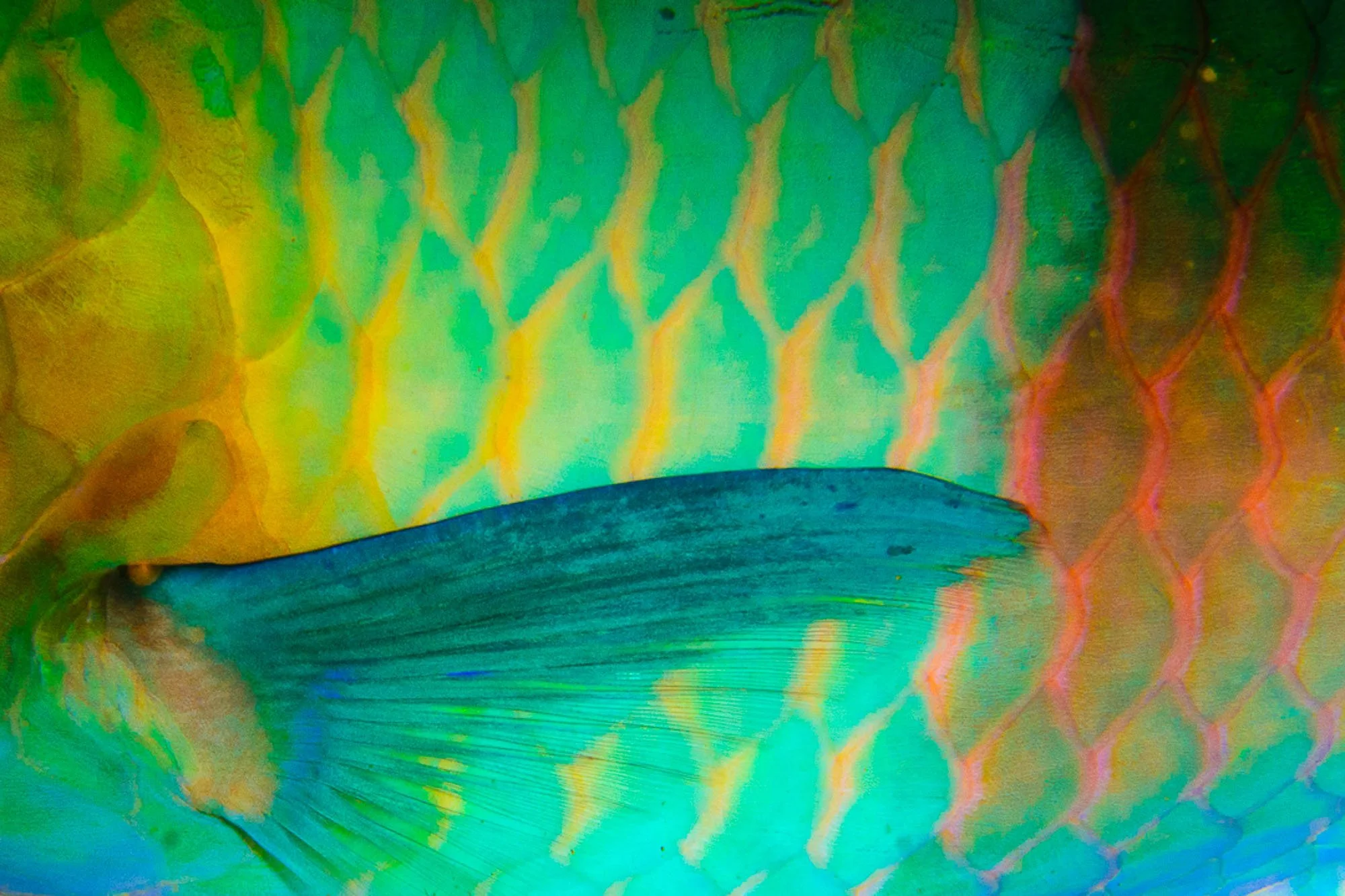
The Wild Pulse of Two Seas
Marine photography created at the point where two forces meet: the open Pacific and the Gulf of California. In Baja California Sur, these two seas coexist and contrast, giving rise to unique scenes of movement, scale, and biodiversity. Each image captures that balance between the wild and the serene—real moments where the ocean reveals itself in its purest form.
The images shown here are a curated selection.
To access the full portfolio and view more available works, download it directly using the button below.
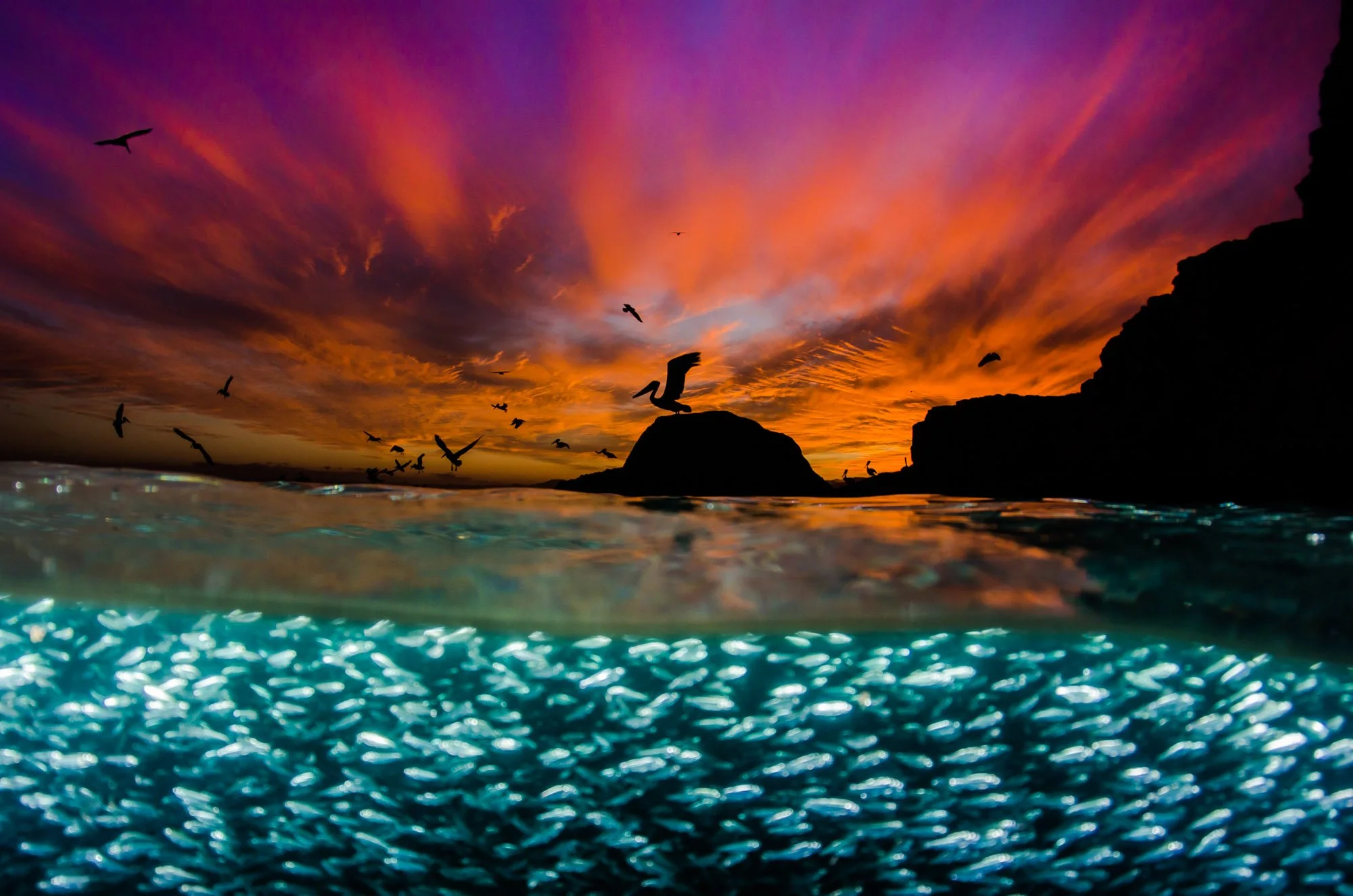
On Isla San Francisco, I captured a moment that won’t repeat. An over-under where two worlds collide: above, a frenzy of pelicans striking the water relentlessly; below, a school of sardines shining like silver, moving as a single organism. All set aglow by a perfect sunset, casting warm tones that penetrate the surface. It wasn’t luck. It was reading the moment, precise positioning, and waiting for the exact second when chaos and harmony align. This image doesn’t just document—it asserts presence.
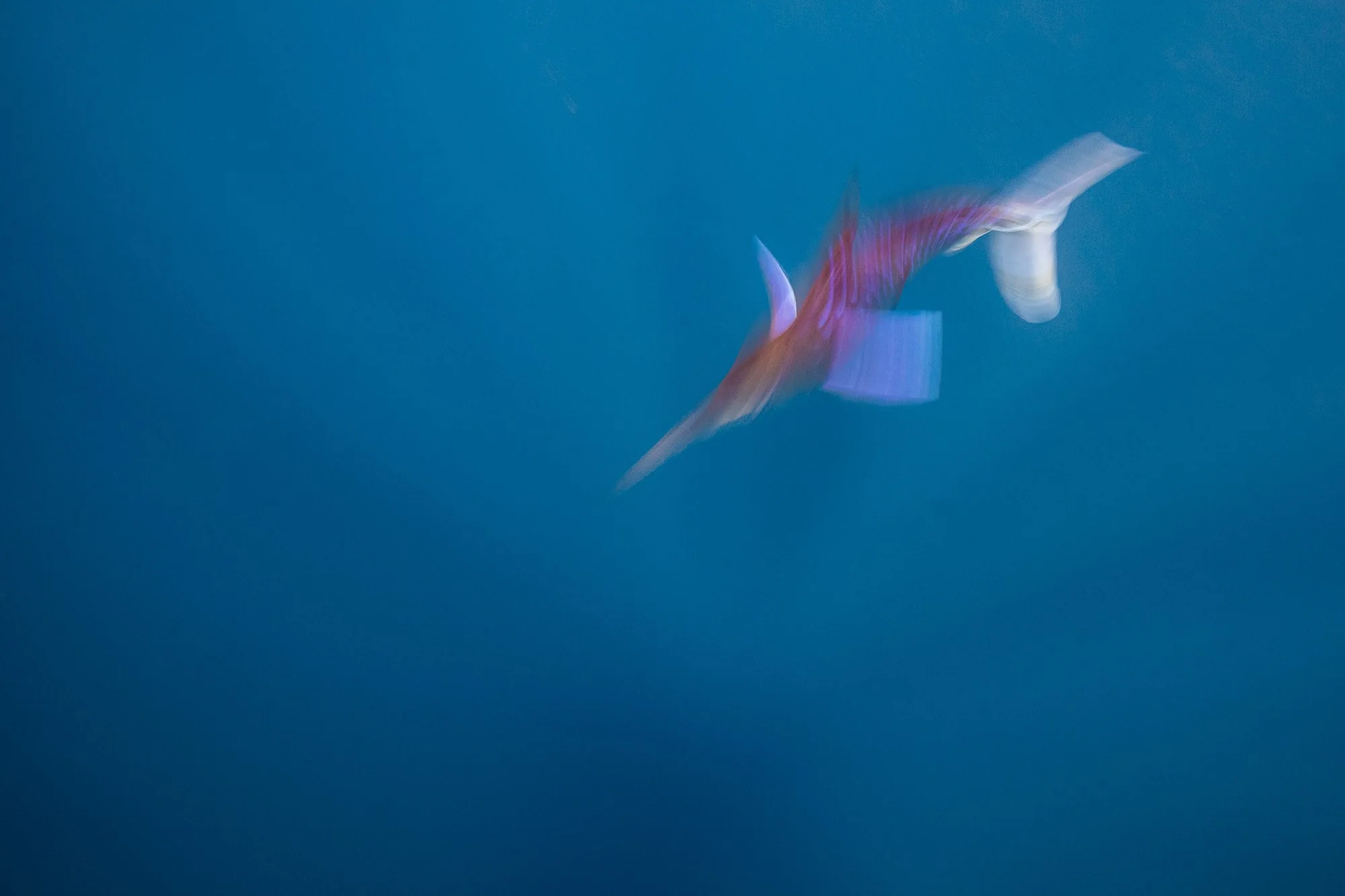
A striped marlin streaks through the blue in a burst of speed, reduced to lines and pure energy. Motion blur erases boundaries, turning the animal into an abstract form where only direction, momentum, and tension remain. This isn’t an image to identify—it’s an image to feel movement in its purest state.
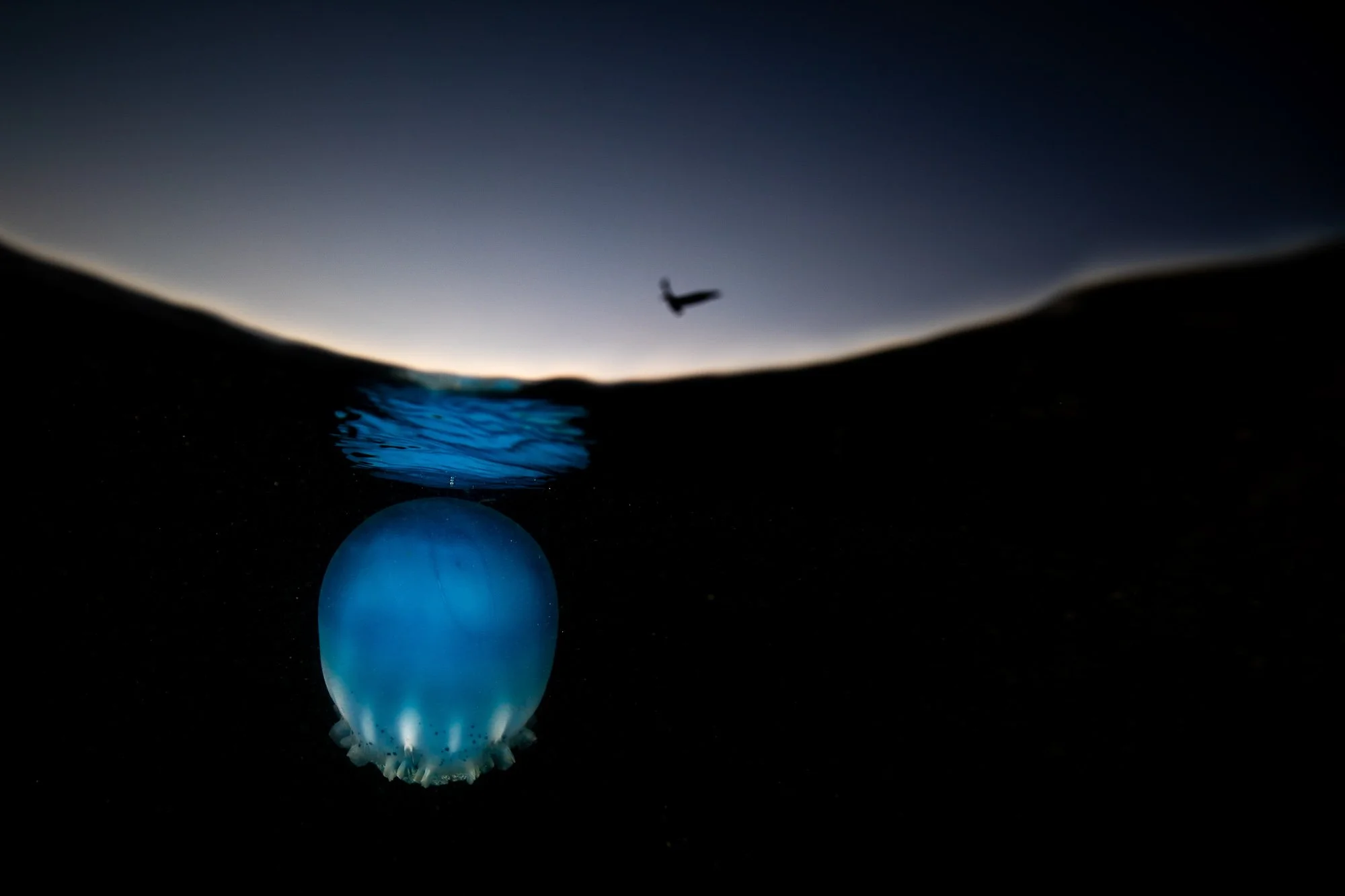
A moment suspended in the last light of day. Half air, half water: above, a lone pelican crosses a fading sky; below, a blue cannonball jellyfish drifts over a dark background that absorbs everything. The surface divides two distinct silences, connected by a light that is already leaving. It’s pure balance between the ephemeral and the eternal, captured in the final second where everything still exists.
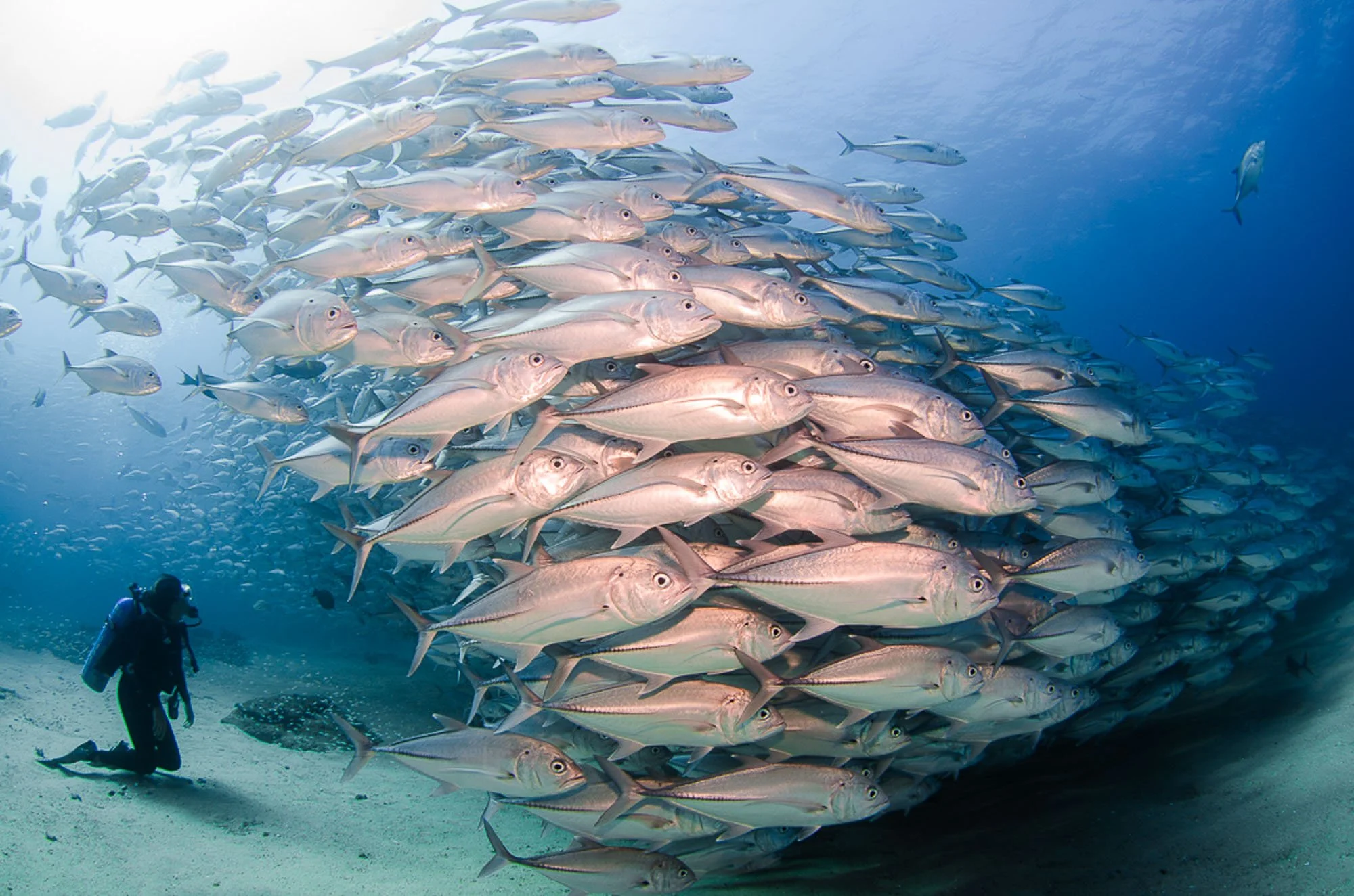
One of my favorites. A diver moves in perfect sync with a school of jacks in the current, both yielding and adapting to the rhythm of the water. In Cabo Pulmo, the power of the sea isn’t resisted—it’s read and flowed with. It’s a moment of total connection, where human and wildlife share the same pulse.
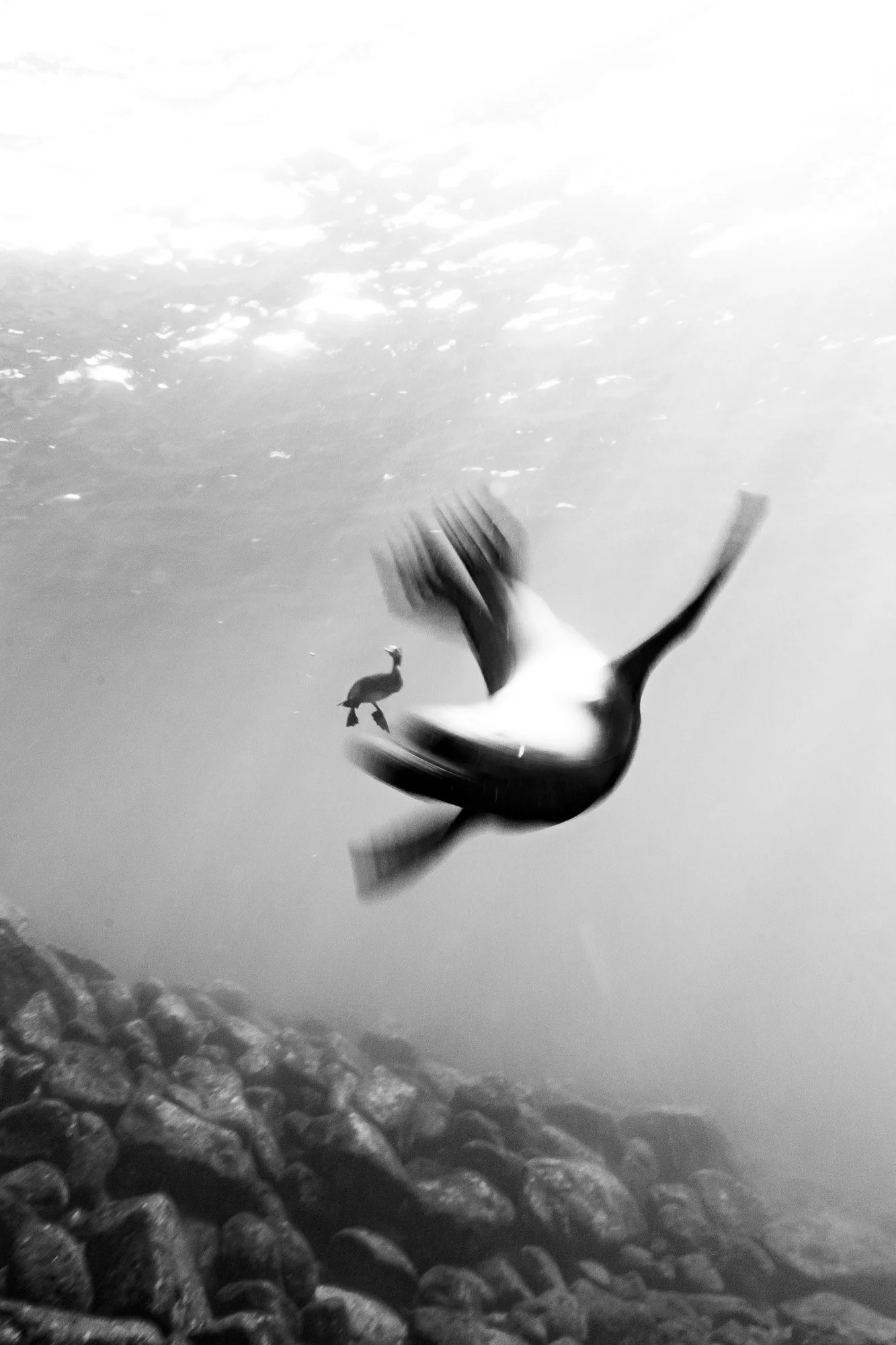
In black and white, movement becomes form. A sea lion crosses the frame in blur, pure energy without edges, while a cormorant dives with surgical precision. Two opposing trajectories meet in a unique composition, where chaos and control coexist in the same instant. This isn’t a scene—it’s rhythm, tension, and direction transformed into an image.
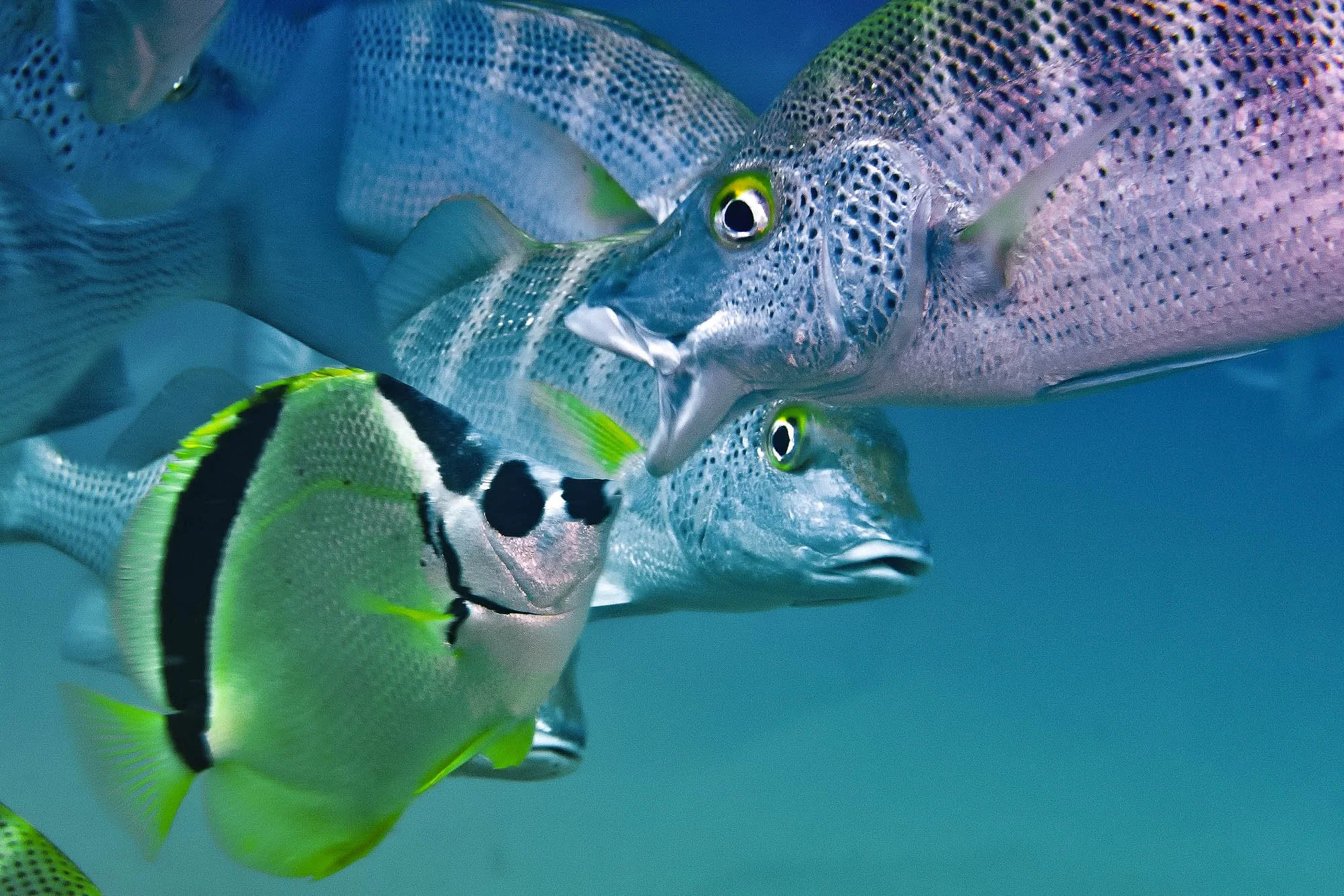
A moment suspended in time. At a cleaning station, one butterflyfish works with precision while another submits to the ritual; just then, a third presence interrupts with a direct, inquisitive gaze that breaks the scene. Three stories in a single frame: interaction, trust, and that uncomfortable instant when wildlife returns your stare.
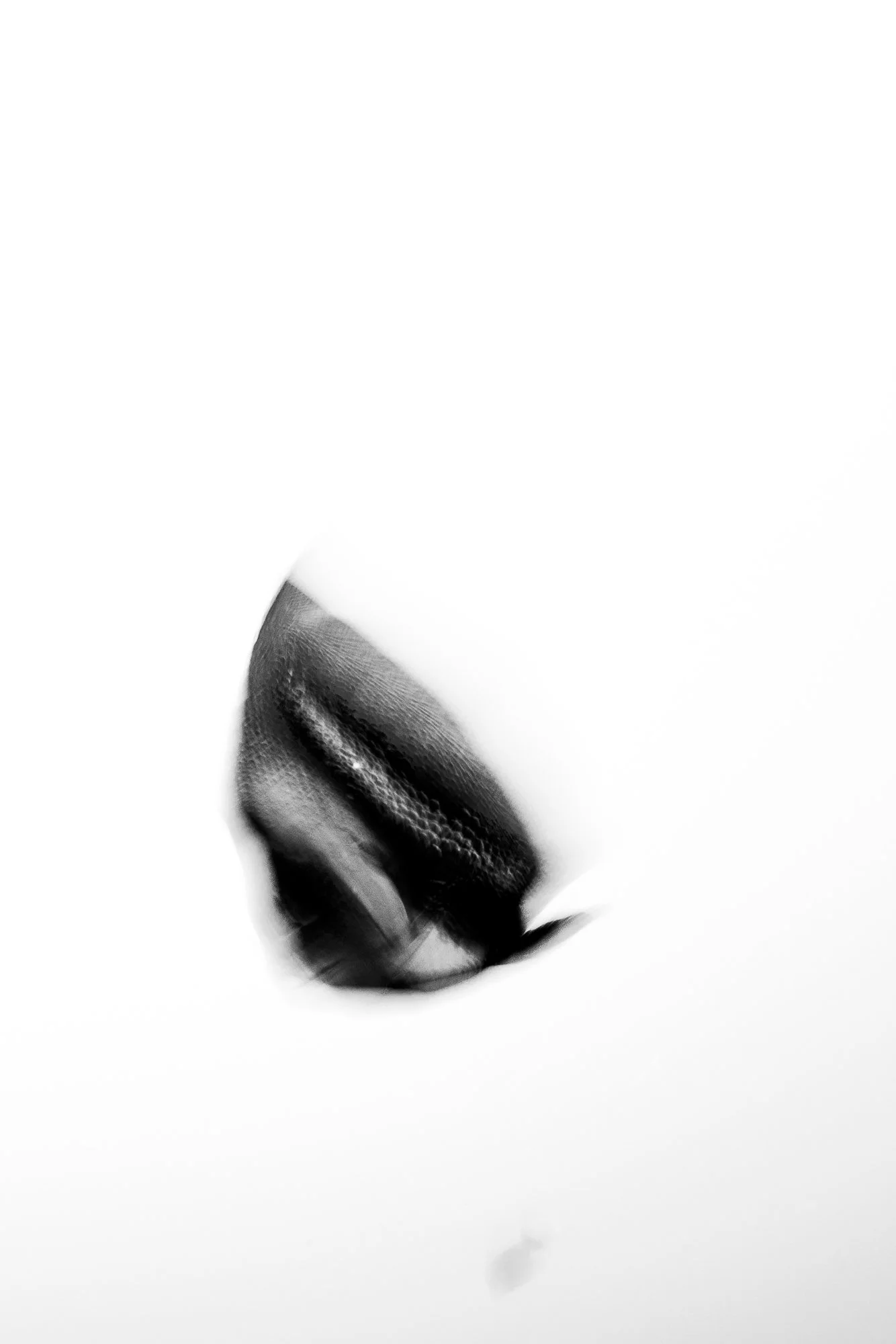
I like to take the image beyond the obvious, stretching its possibilities and exploring the edge between form and motion. Here, a Gulf of California angelfish transforms into strokes in black and white, where detail gives way to energy. It’s not just the subject—it’s the gesture of movement turned into image.
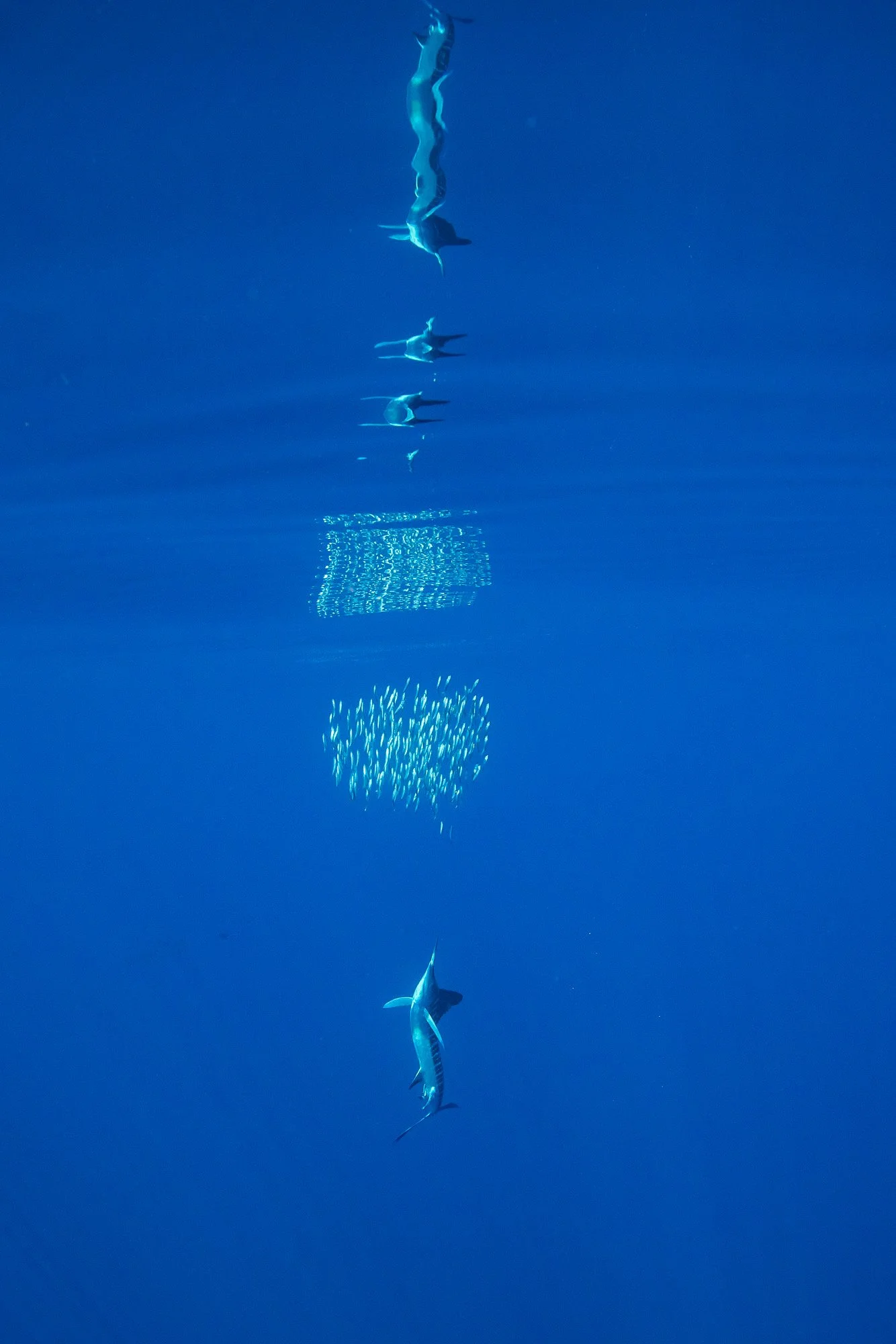
From the depths of blue, a marlin emerges with lethal precision toward a school of sardines, reducing the scene to pure lines and contained tension. The reflection on the surface doubles the instant, creating a perfect balance between above and below. It’s a minimalist moment charged with energy, where everything happens in a fraction of a second.
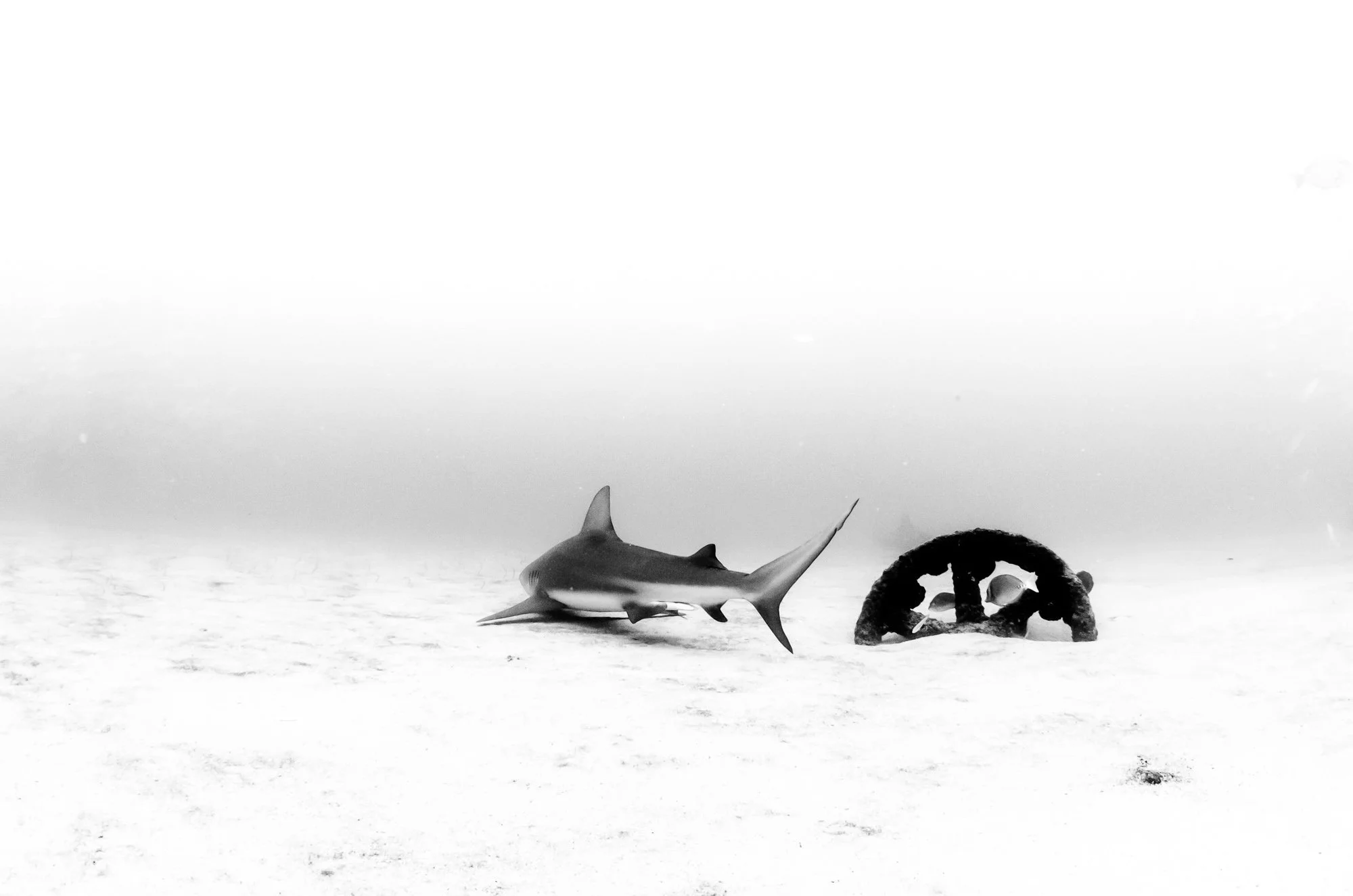
The boat El Vencedor brings together everything that makes a dive spectacular and highly photogenic. In this image, two of its most iconic elements converge: the pulley, photographed countless times, and the imposing presence of a bull shark that adds character and tension to the scene. It’s the perfect contrast between history and wildlife, where the familiar transforms into something unique at the exact right moment.
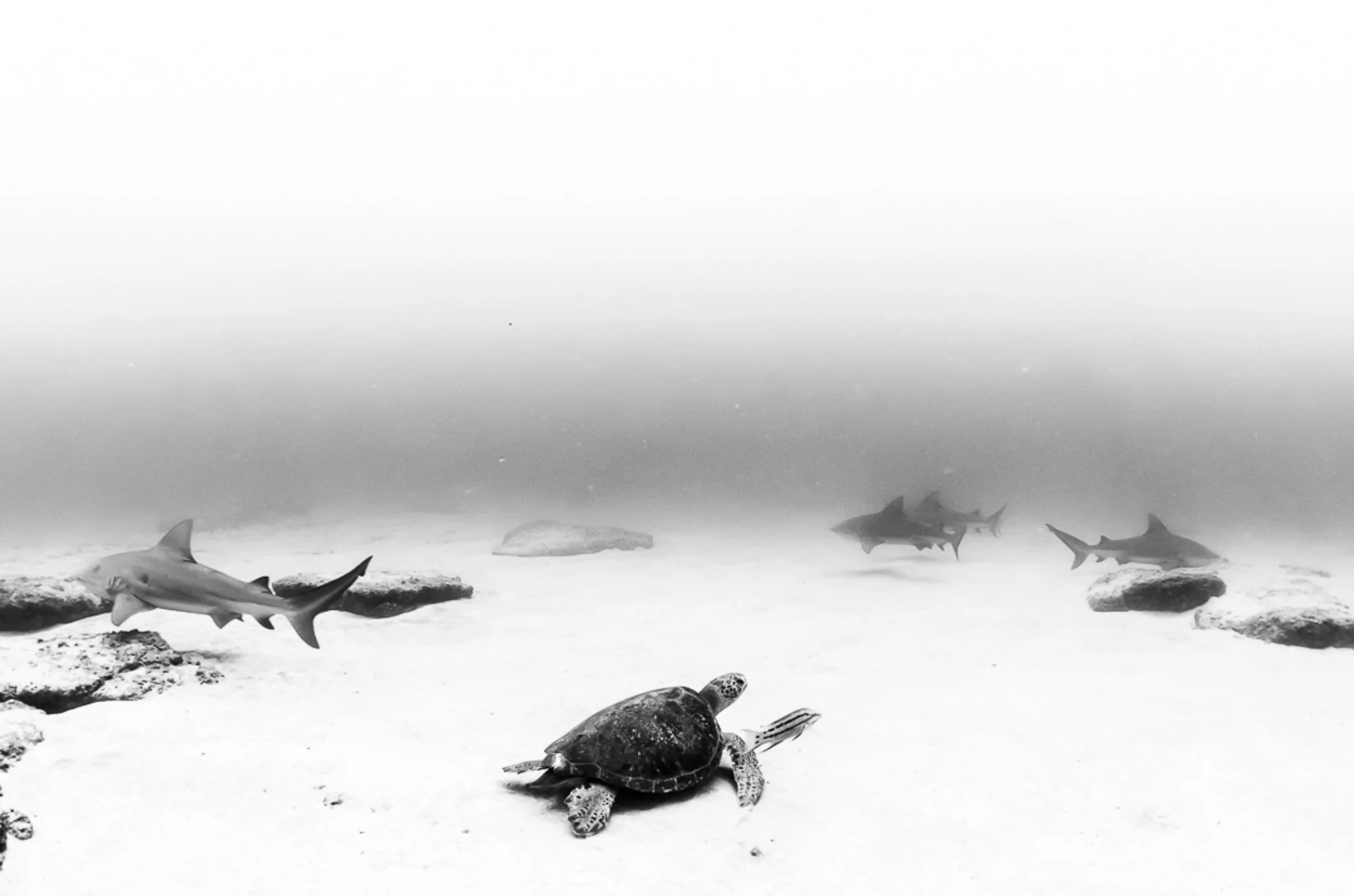
A turtle moves forward with a defiant attitude in a territory ruled by sharks, unhesitant, marking its presence where few dare. In Cabo Pulmo, the scene is completed by a small fish following closely, almost like its sidekick, mirroring every movement. It’s character and balance: calm, risk, and companionship all in a single moment.
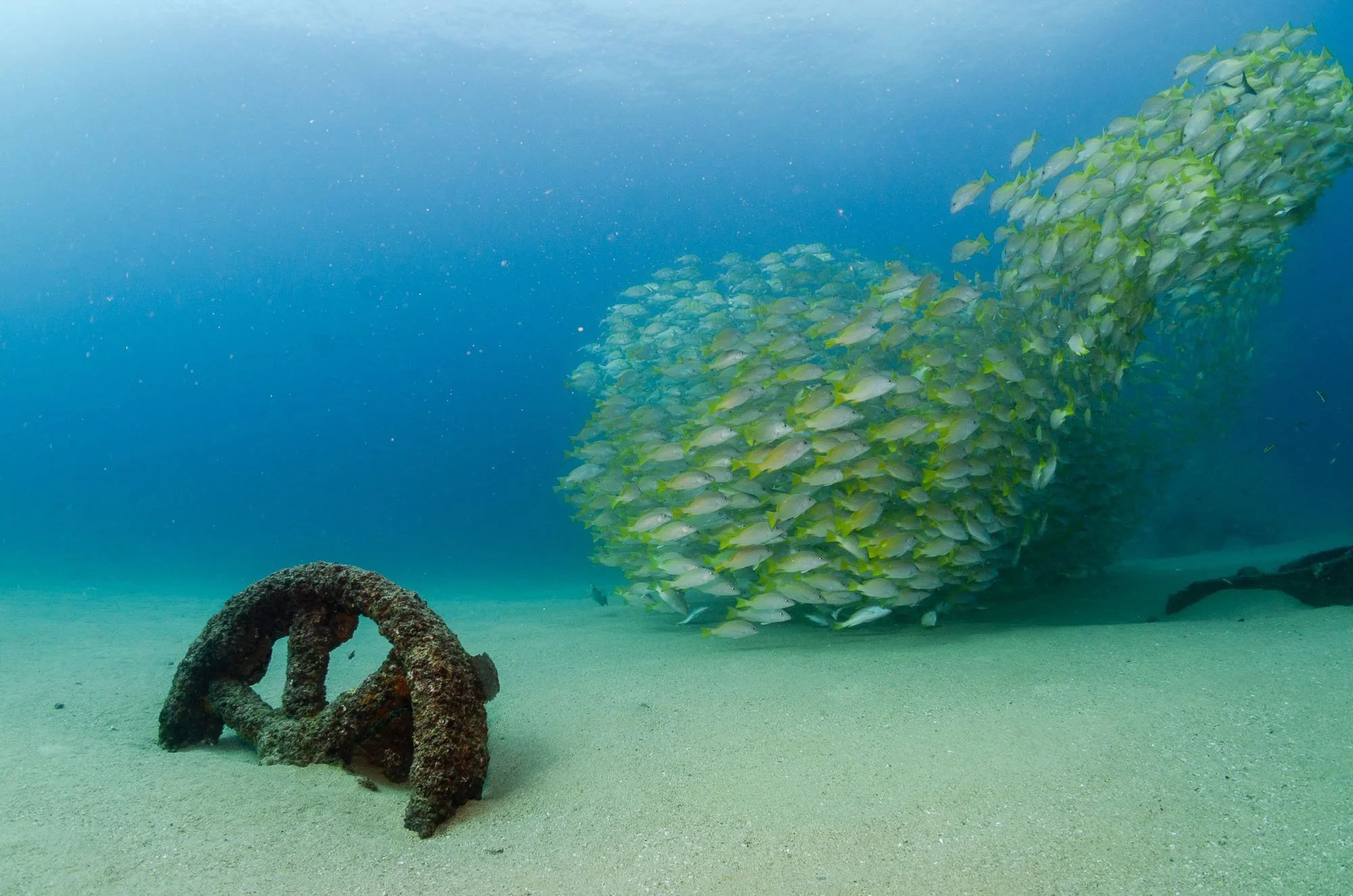
Remains of a submerged anchor lie on the seafloor alongside a large school of fish in the ocean.
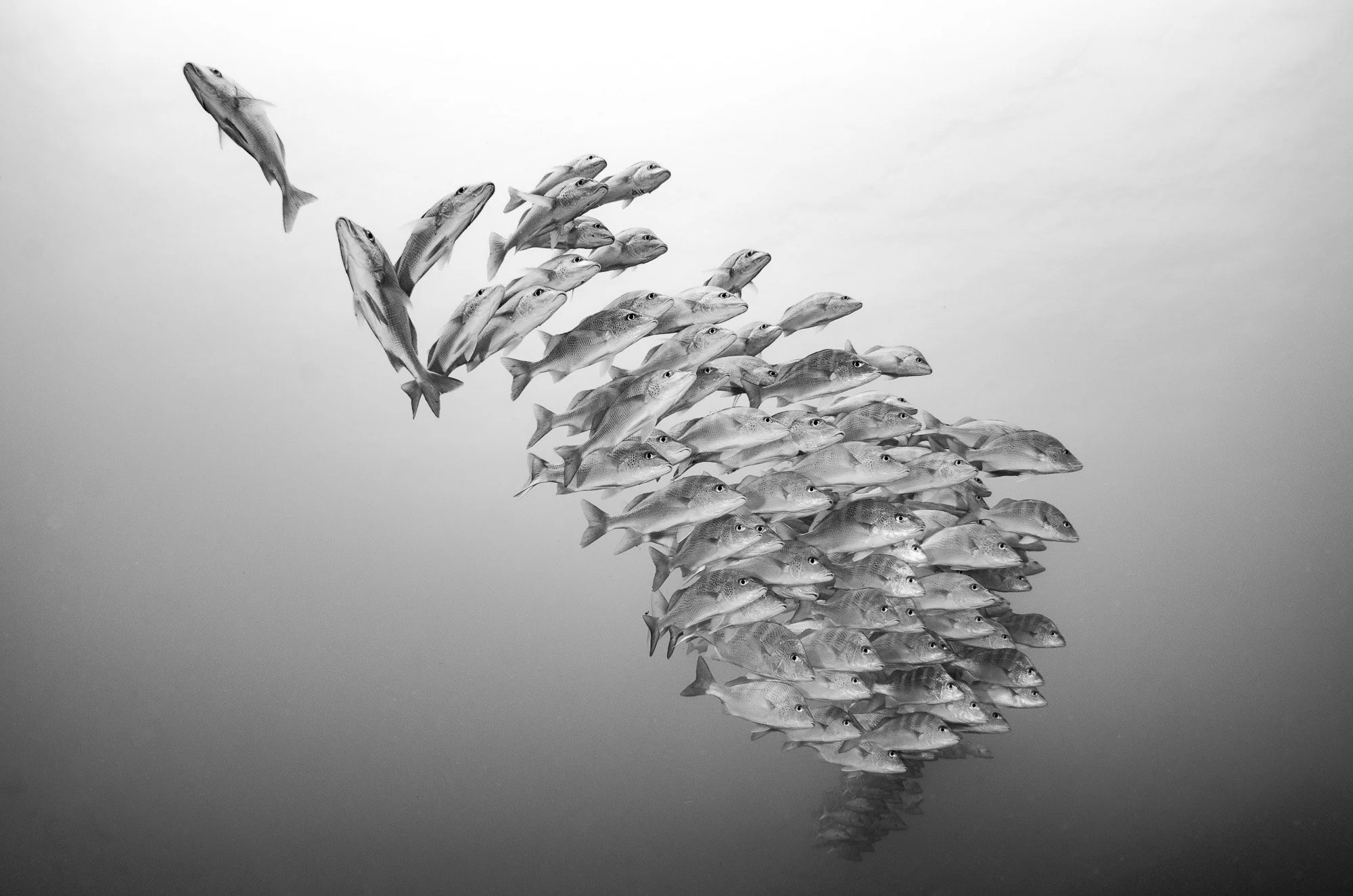
A dense school of fish moves with surgical precision, each individual aligned as if responding to a single mind, defying the current pushing in the opposite direction. In black and white, distractions vanish and structure emerges: the bodies become strokes, scales catch the light like metallic flashes, and movement transforms into pattern. The current, invisible yet present, is felt in the tension of the group, in the subtle tilt of each fish as it adjusts its position without breaking the harmony. There’s no chaos, no rush; there’s absolute synchrony. It’s an exercise in order within resistance, a natural choreography where every fish knows exactly where to be. An image that not only shows marine life, but discipline, direction, and collective purpose.
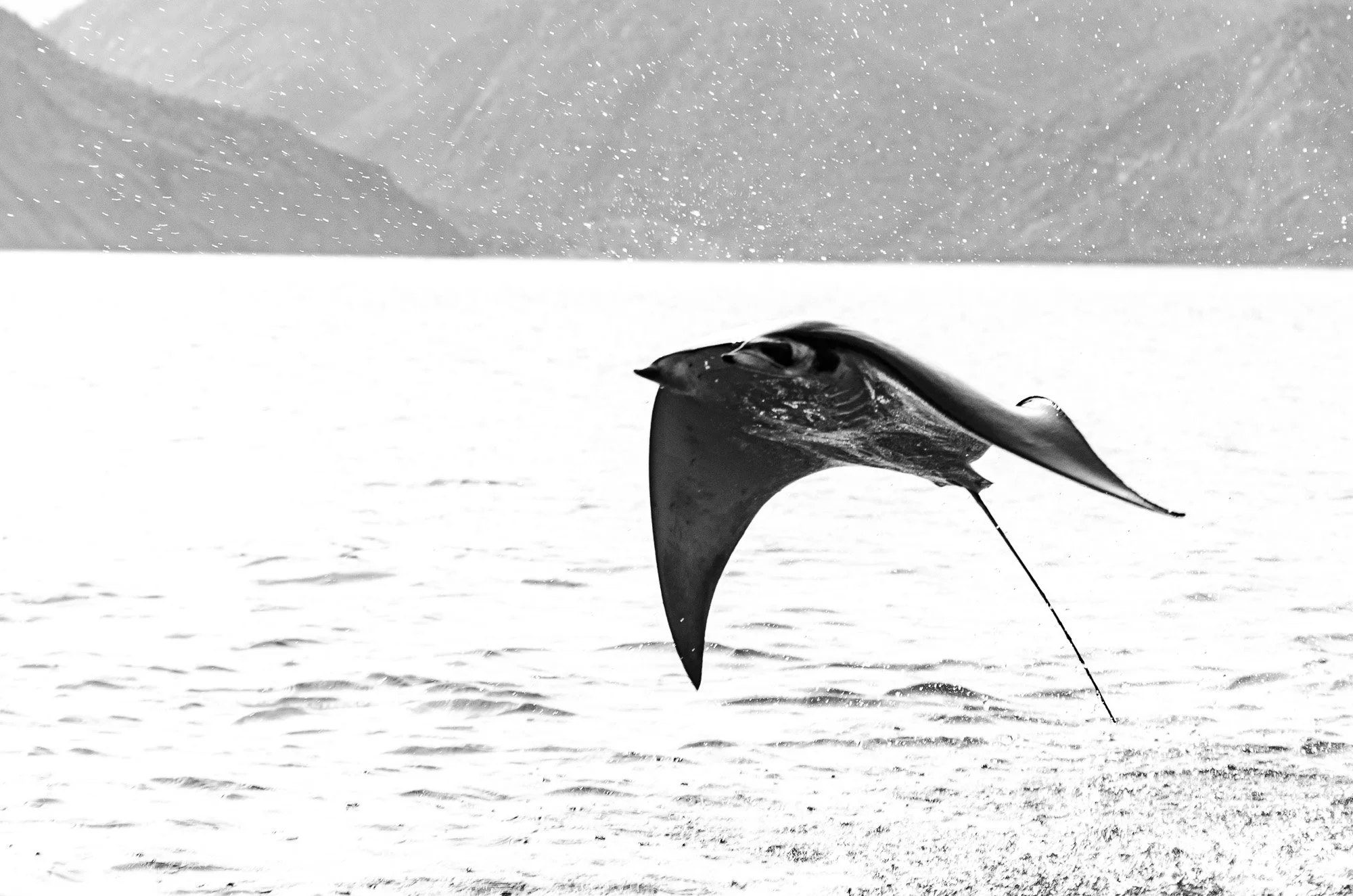
A mobula bursts from the water in a clean, powerful leap, frozen in the air for a fraction of a second that feels eternal. Its silhouette, captured in high contrast, stands out against the glistening surface of the Gulf of California, transforming into a natural icon of this sea. Its outstretched wings trace an almost perfect shape, as if the ocean itself were breathing through it. In black and white, the scene becomes more symbolic than literal: the texture of the water, the sunlight reflected, and the shadow beneath the mobula build an image of strength and freedom. This isn’t just a jump—it’s a statement. It represents the wild energy of the gulf, its biological richness, and that unpredictable instant that defines marine life in this region. It’s a living symbol: movement, elegance, and character. A single figure that encapsulates an entire ecosystem.
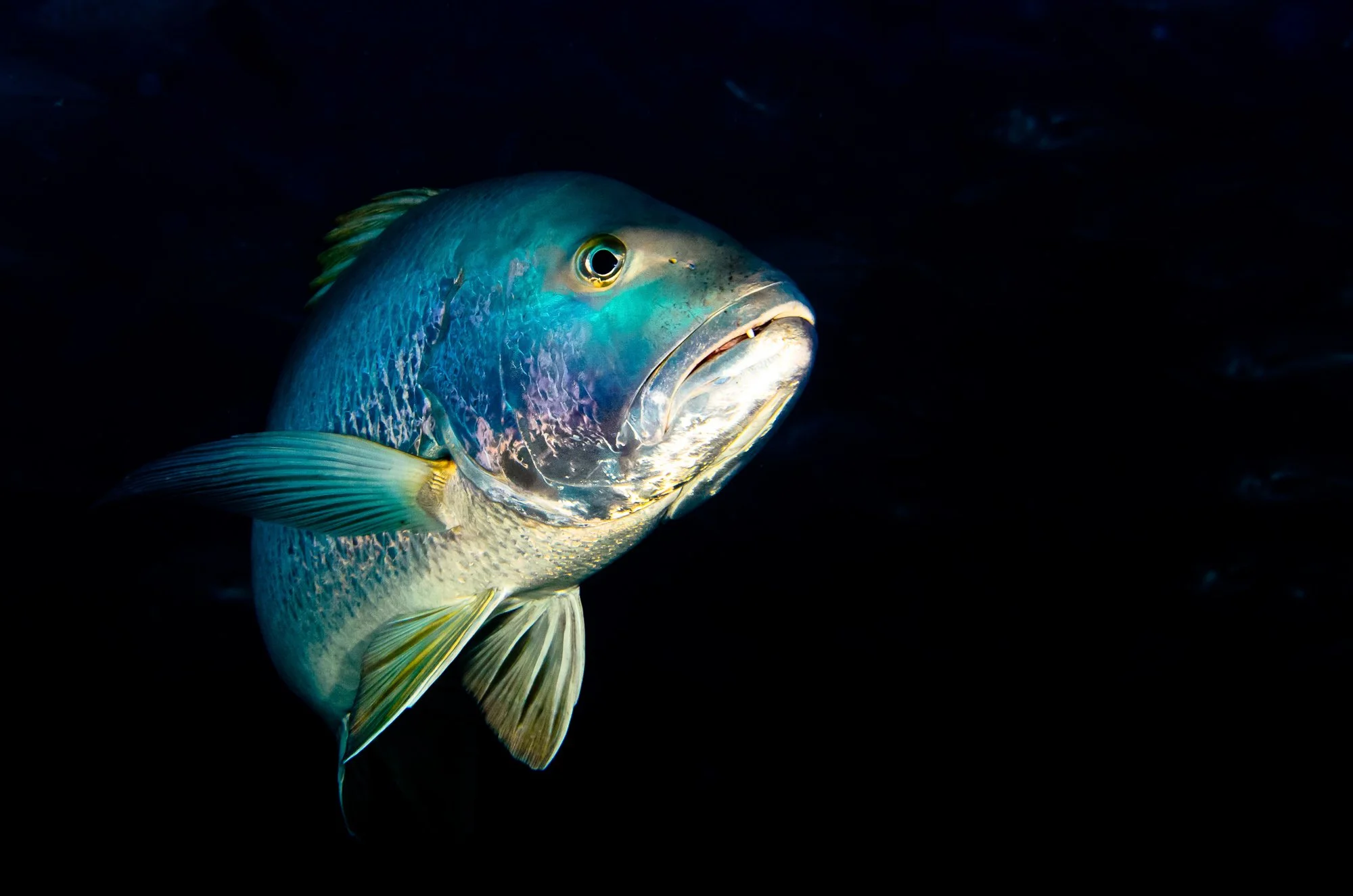
A dogtooth snapper emerges from the darkness like a solid, almost sculptural presence. The black background removes all context, forcing the eye onto the subject: its robust body, defined scales, and that firm expression that gives it character. The light falls selectively, revealing just enough, tracing contours and textures while the rest disappears into deep shadow. The contrast makes the fish the absolute protagonist. Every detail—the strong jaw, the alert eye, the subtle curve of the body—conveys control and territory. No distractions, no visual noise; it’s a direct, clean, almost intimidating portrait. The absence of environment doesn’t isolate it—it elevates it. It’s an image of pure presence. Silence, strength, and precision captured in a single frame.
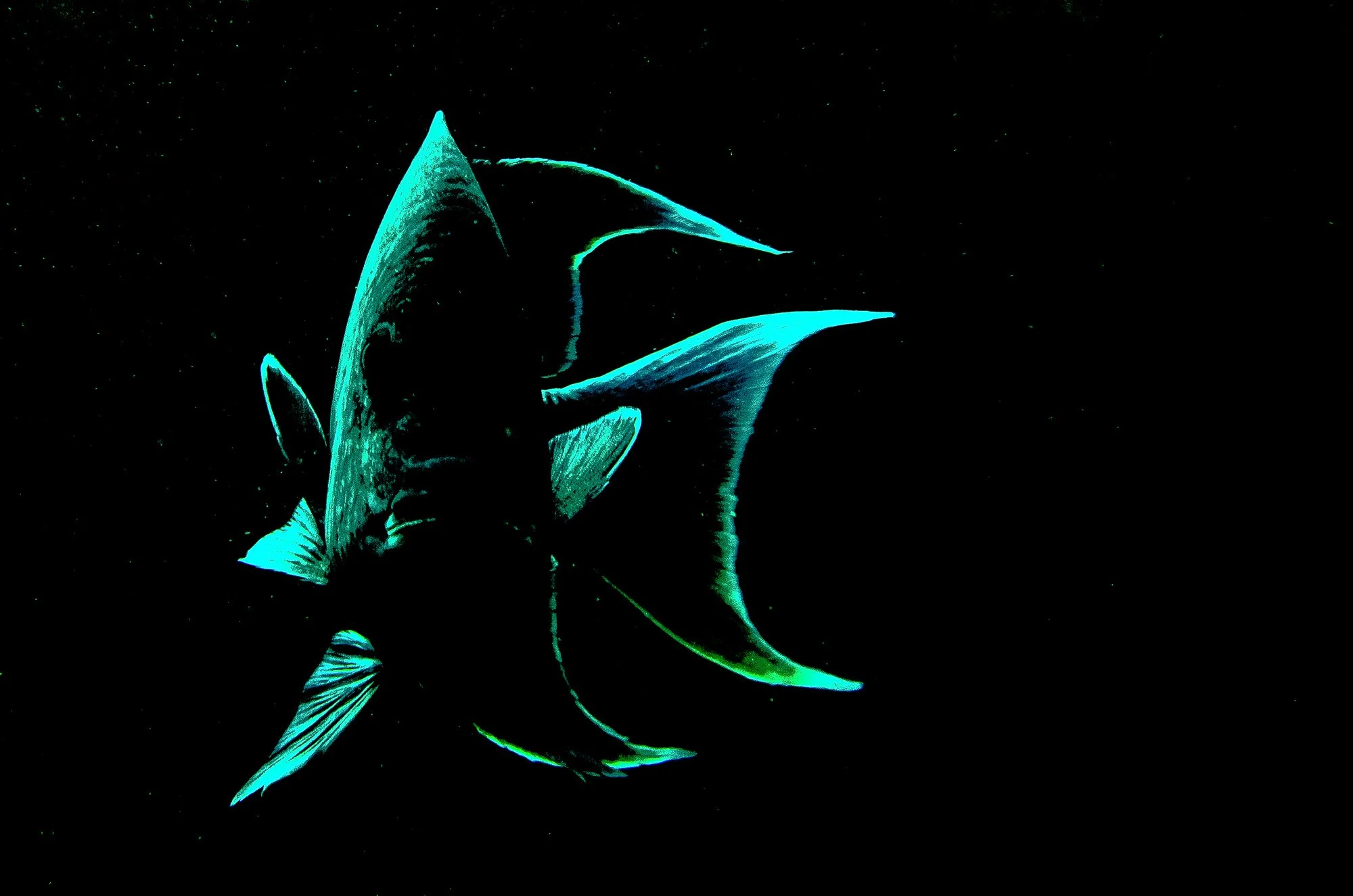
A giant damselfish appears barely suggested in the darkness, as if the sea is deliberately hiding it. It doesn’t fully reveal itself; only its edges catch the light, outlining a precise silhouette that floats between the visible and the invisible. The rest is deep shadow, a void that surrounds it and makes it even more imposing. The luminous contour defines its shape with elegance: the marked dorsal fin, the compact profile, restrained movement. You don’t need to see details to feel its presence. It’s an image built from absence, where light doesn’t show—it suggests. Minimalist, direct, and powerful. More than a fish, it’s a form emerging from the abyss, a play of control between light and darkness.
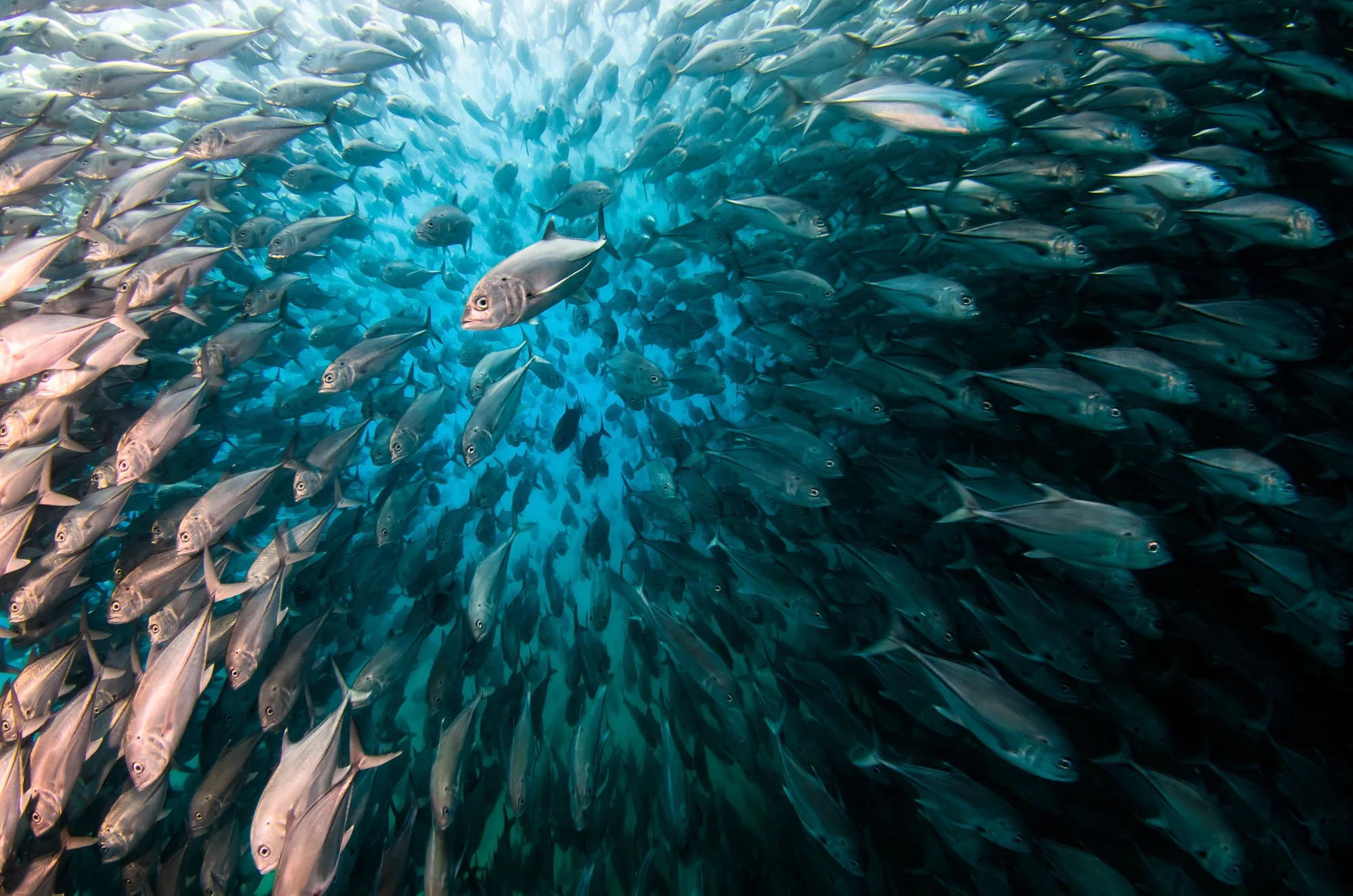
Amid a school of jacks in a full explosion of movement—speed, twists, and crossing reflections—a single individual breaks the uniformity and becomes the protagonist. The school compacts and opens like a living mass, responding to an invisible force, while light bounces off hundreds of bodies, creating a sense of chaos perfectly coordinated. And there, in that precise instant, one stands out. Maybe by direction, by light, or a fraction of a second difference in movement. That fish doesn’t follow—it decides. It separates just enough to capture attention, creating a point of tension within the whole. The image is pure contained energy: a contrast between crowd and identity. It’s not just a school of fish—it’s the exact moment when the collective allows the individual to exist.
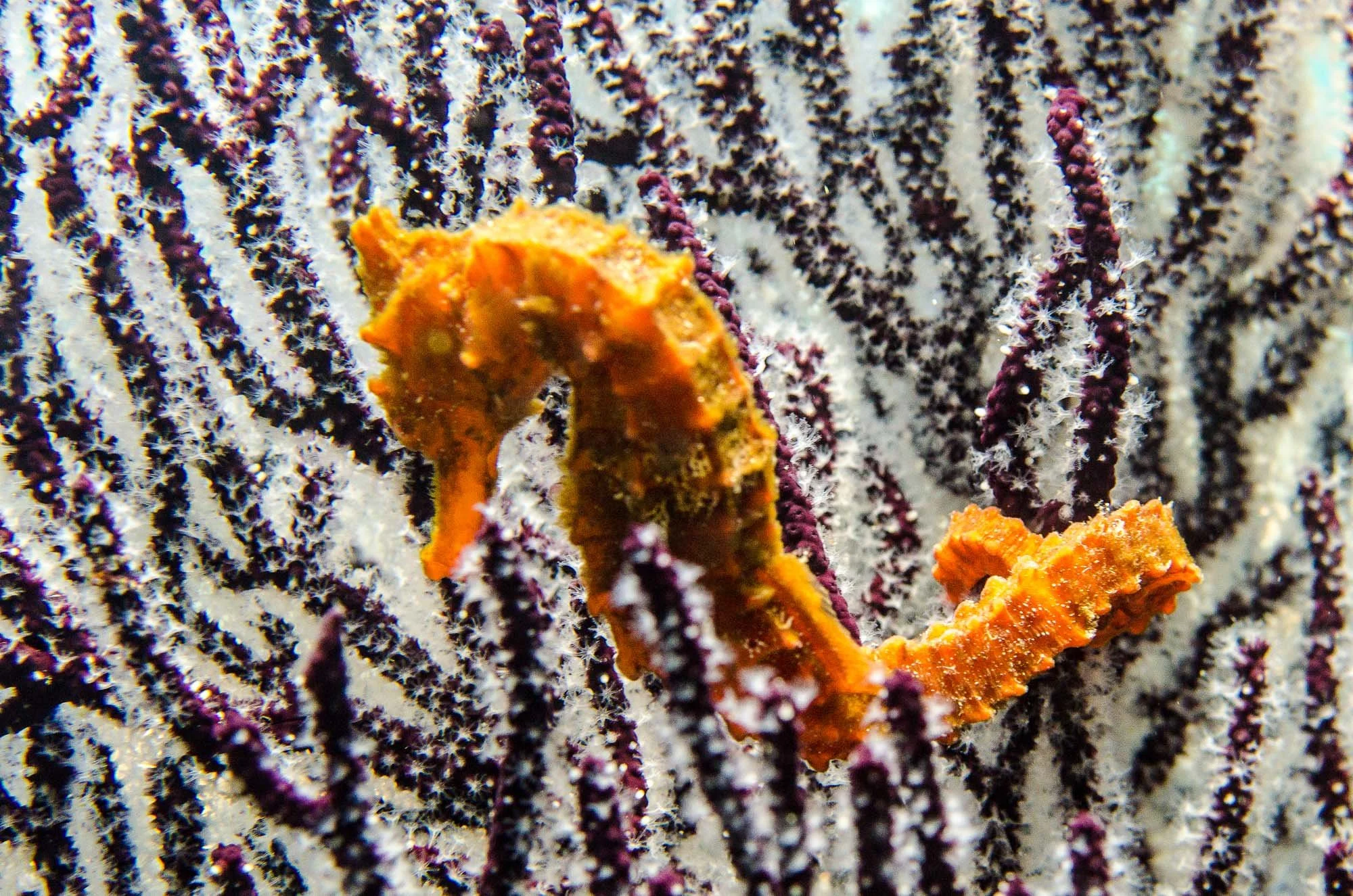
An orange seahorse clings precisely to the branches of a gorgonian coral, suspended in perfect balance within the current. Its small but characterful body contrasts with the organic structure of the coral, which fans out gracefully in the water. The seahorse’s vibrant color breaks the softness of the surroundings, while its rough texture blends just enough to avoid disappearing entirely. The scene is calm, yet tense: the current moves the coral slightly, and the seahorse responds—steady, adapted, holding on. It’s an image of precision and survival. Everything is in place: form, color, and behavior. An intimate moment within a complex ecosystem, where every element performs its role without excess.
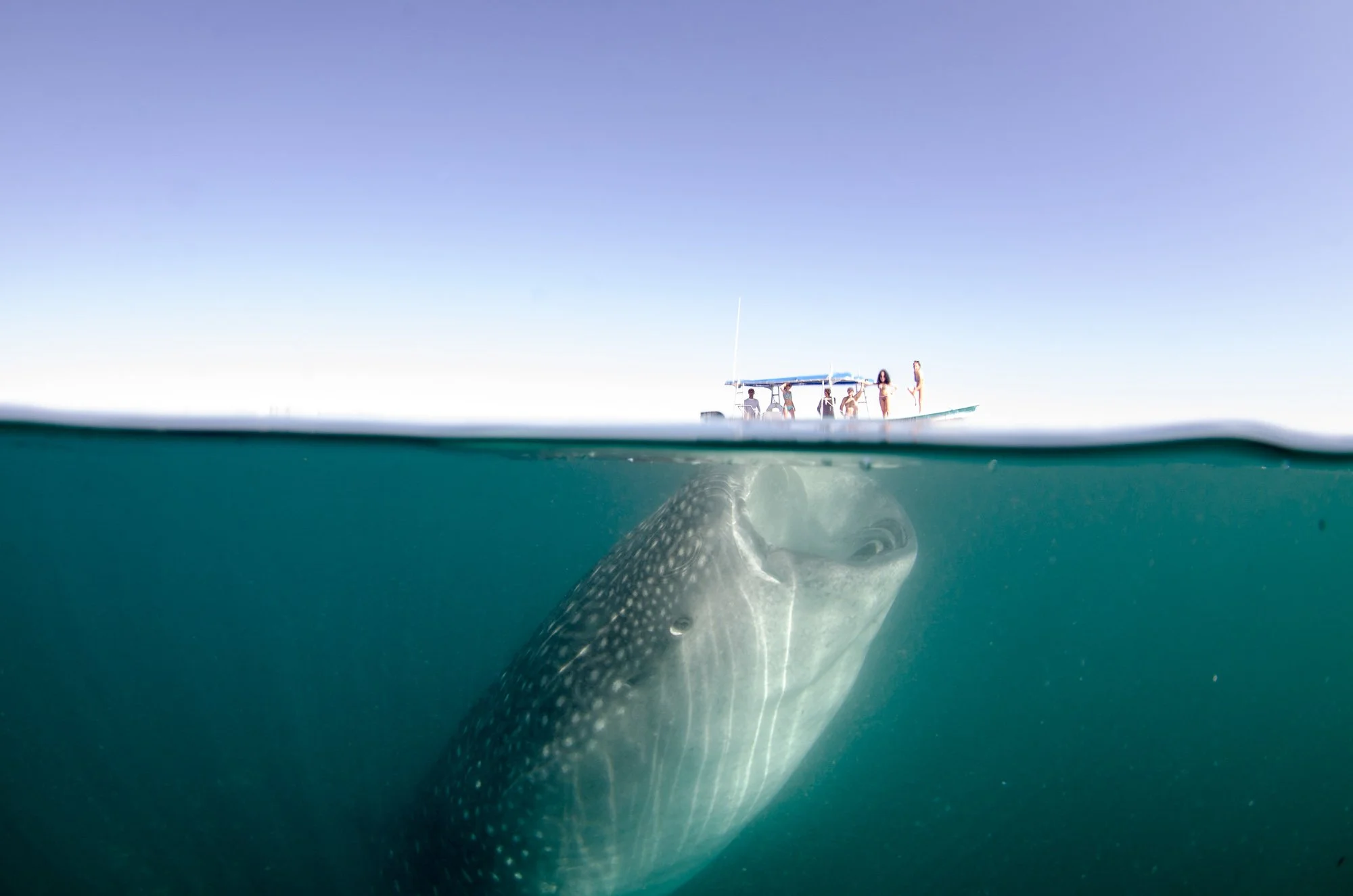
A whale shark crosses the surface in a perfectly synchronized over-under, where the world splits into two planes: above, a boat floats calmly; below, the vast animal moves with serene grace. The waterline acts as an optical boundary that tricks the eye, aligning both elements in a precise instant. The illusion happens at that exact point: the whale shark’s open mouth aligns with the boat’s position, creating the impression it’s about to swallow it. But there’s no violence—only scale. The size difference, amplified by perspective, turns the scene almost surreal. Light plays across both worlds: reflections and sky above, deep tones and texture below. It’s an image driven by timing and visual reading. This isn’t just a record—it’s a natural trick, where ocean and composition align to tell a story in a single shot.
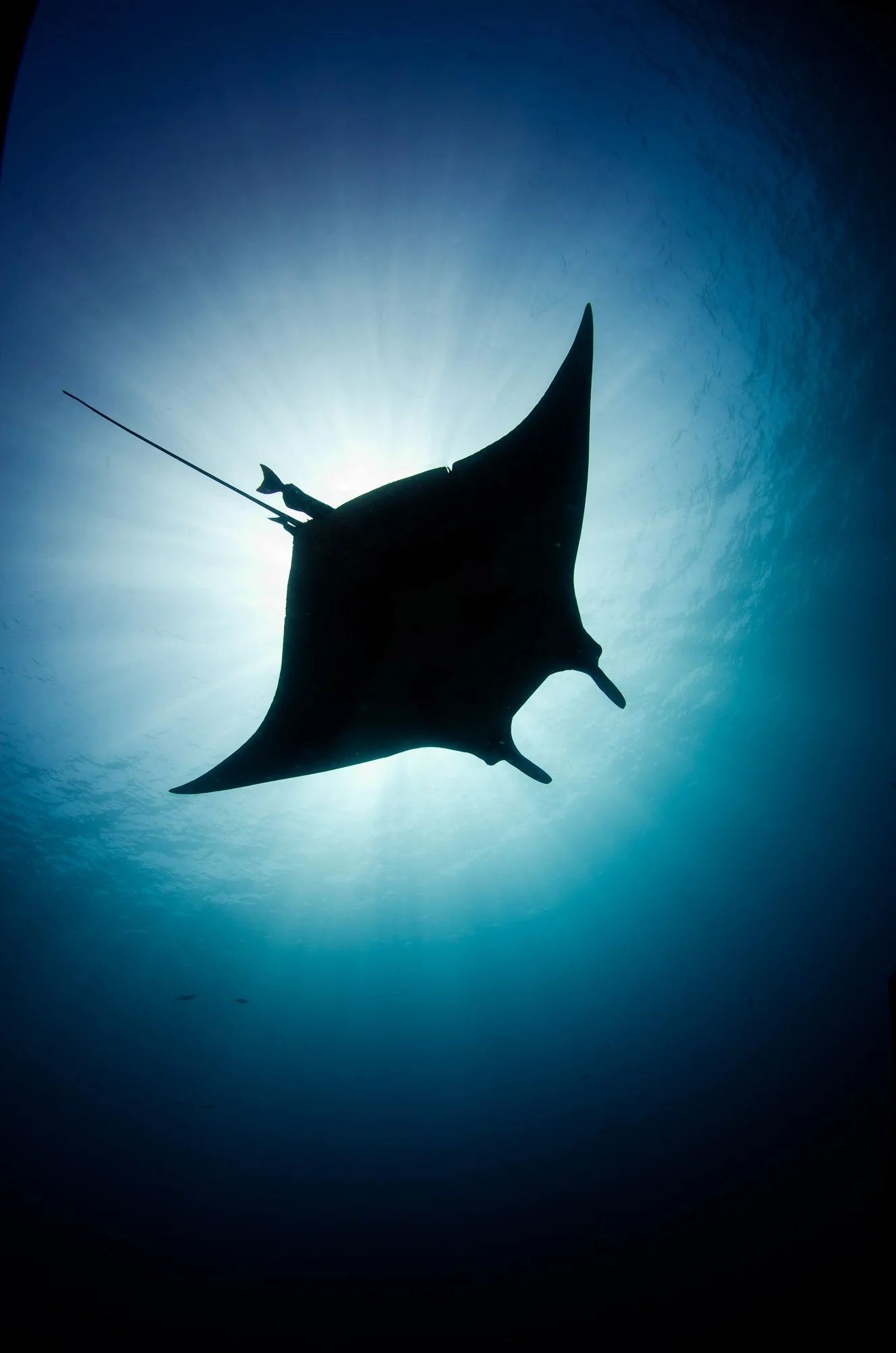
A giant manta glides silently beneath the surface at La Reina, Isla Cerralvo, captured in clean backlight with the sun just behind, sending rays that pierce the water. The manta isn’t shown in detail; it’s defined by its perfect, expansive silhouette, almost infinite, outlined against the light. Its wings stretch like a moving geometric form, each flap slow, controlled, and elegant. The background disappears, reducing everything to light and shadow. The water acts as a filter, softening the scene and giving it an almost ethereal quality. No visual noise, no distractions. Just a dominant figure floating between surface and depth. It’s an image of scale and absolute calm, where the manta’s presence fills everything without needing to reveal more.
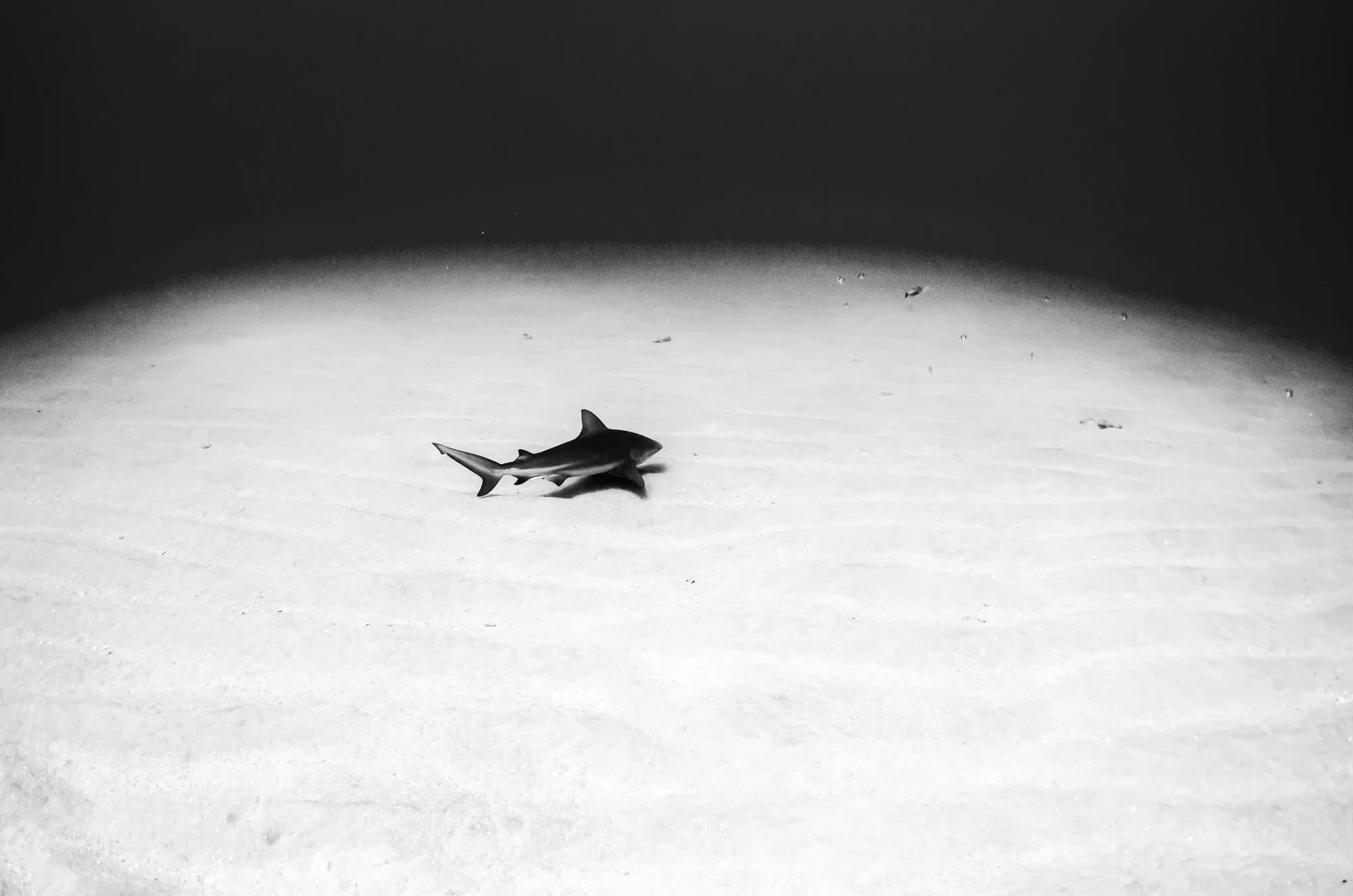
A bull shark crosses the sandbar with a firm trajectory in Cabo Pulmo, captured in black and white under a strictly minimalist approach. The background is clean, almost empty: only the soft texture of the sand and a slight suspension of particles suggesting movement. The light falls from the side, just enough to define the body’s contour and separate its silhouette from the background. No excess detail—only clear lines: the robust head, straight back, tail in motion. Everything else disappears. The frame breathes negative space, reinforcing the sense of isolation and control. It’s a contained, direct image. No forced drama, no extraneous elements. Just form, direction, and presence. A predator defined by structure, moving with precision in an environment reduced to the essentials.
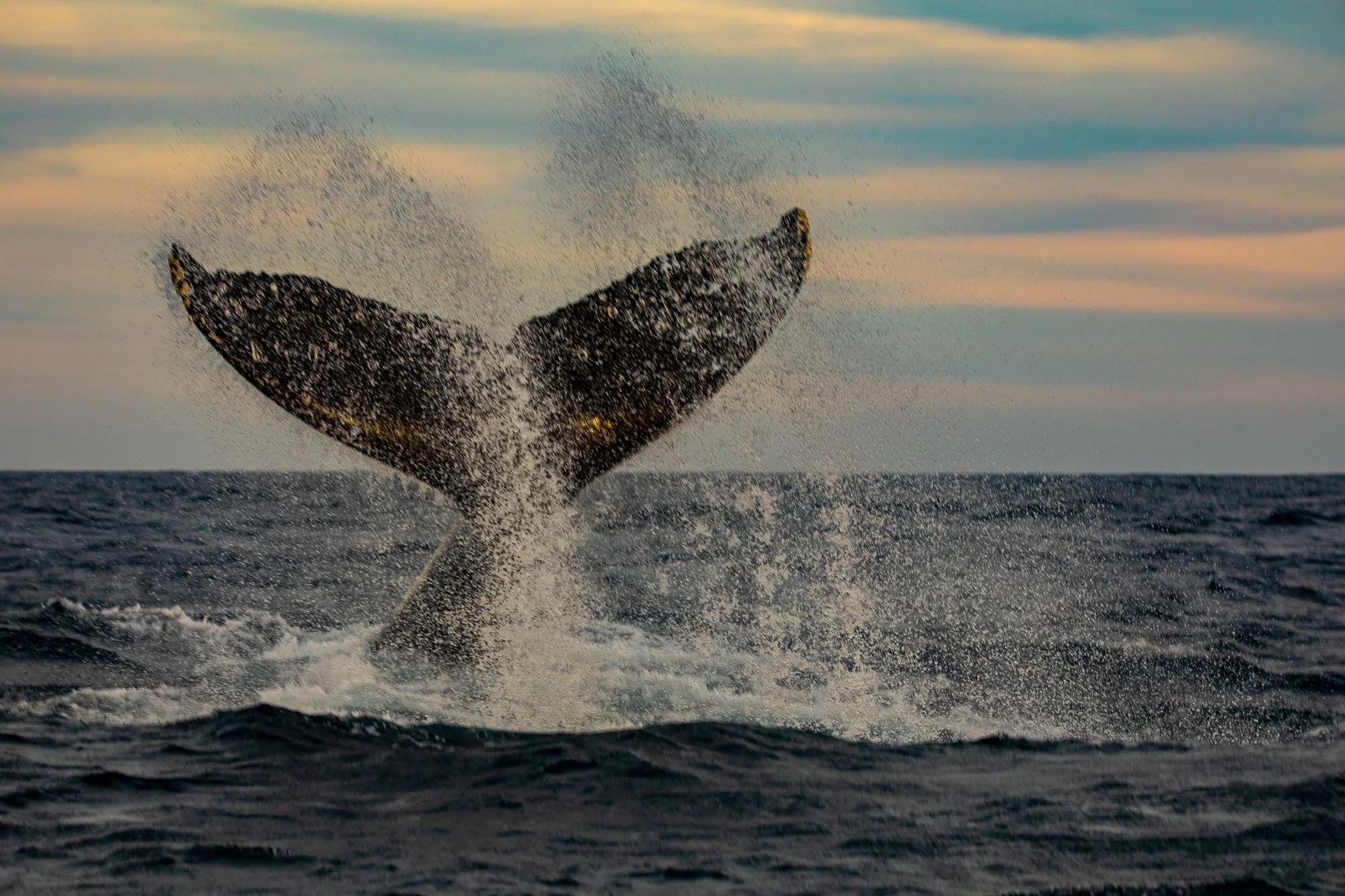
A whale lifts its tail in full motion at sunset, captured at the precise moment it breaks the surface and sends a curtain of water into the air. The sky, painted in warm tones, reflects on the suspended droplets, creating flashes that contrast with the dark silhouette of the caudal fin. The low light cuts the form with precision, while the force of the movement translates into texture: frozen splashes, lines of falling and dispersing water, pure energy in transition. It’s not a slow gesture—it’s a controlled, powerful strike that leaves a visual mark on the surface. It’s an image of closure and impact. The day fades as the action reaches its peak. Movement, light, and timing aligned in a single instant.