Wildlife in Open Land
Terrestrial photography that journeys through Baja California Sur, from its rugged sierras to its vast open deserts, capturing landscapes, birds, and wildlife in their most authentic state.
Scenes where light defines the territory, animals set the rhythm, and every place reveals its true character with no intervention.
Images that show the very essence of the peninsula: raw, alive, and in constant motion.
The images shown here are a curated selection.
To access the complete portfolio and see all available works, download it directly using the button below.
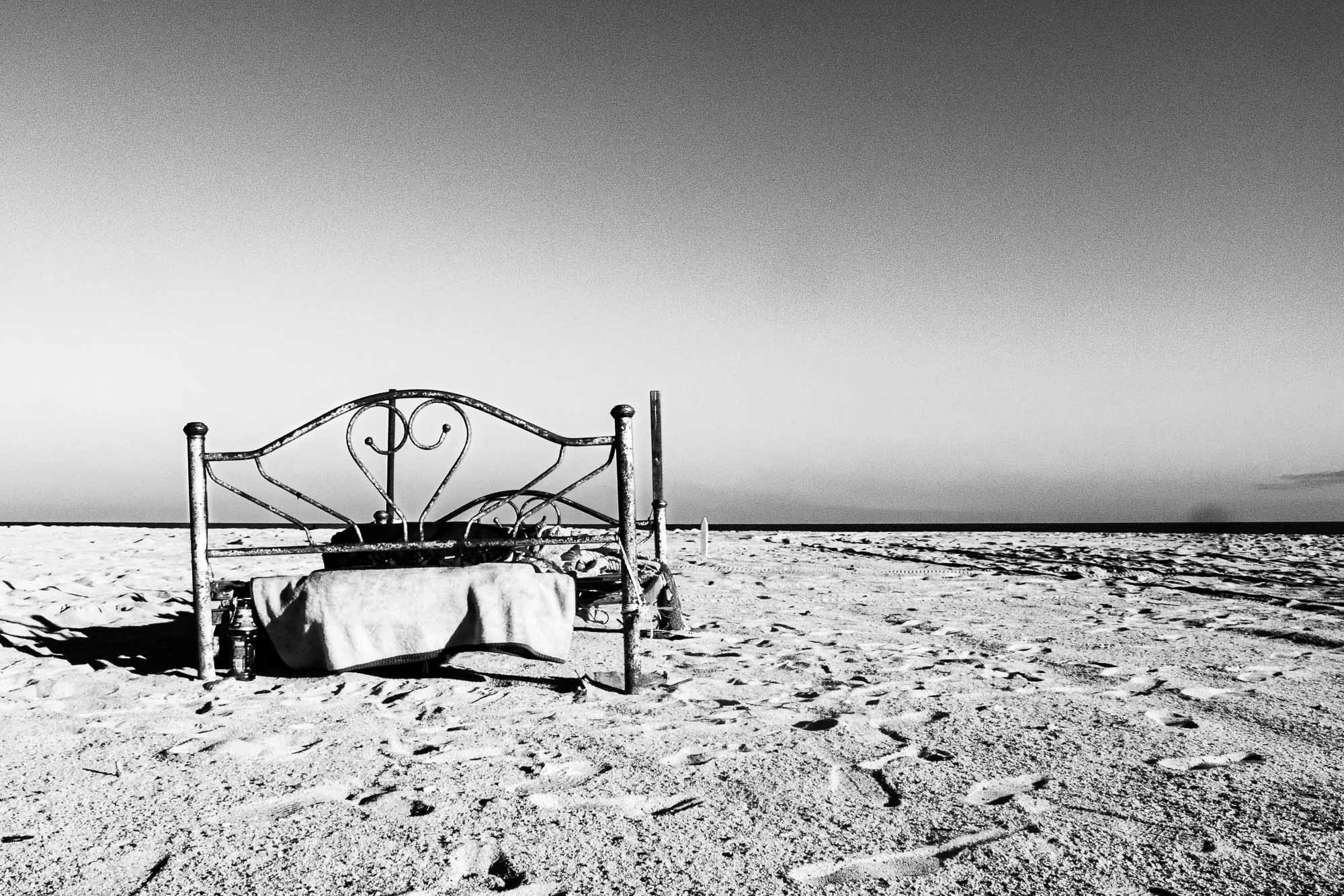
A bed appears in the middle of the beach, out of place, almost absurd at first glance. In black and white, the scene loses its anecdotal quality and gains meaning: simple lines, hard shadows, and a clean horizon that emphasize the contrast between object and surroundings. There’s no immediate context, only the question. But there is history. In Baja California Sur, fishermen used to bring these beds out in the heat to sleep outdoors, letting the breeze from the Gulf of California do its work. It was practical, straightforward, part of a way of life adapted to the environment. Today, it’s an increasingly rare scene. The image stops being a curiosity and becomes a document: a trace of a fading custom. Minimalist, silent, with that kind of strangeness that doesn’t need a long explanation to stick in your mind.
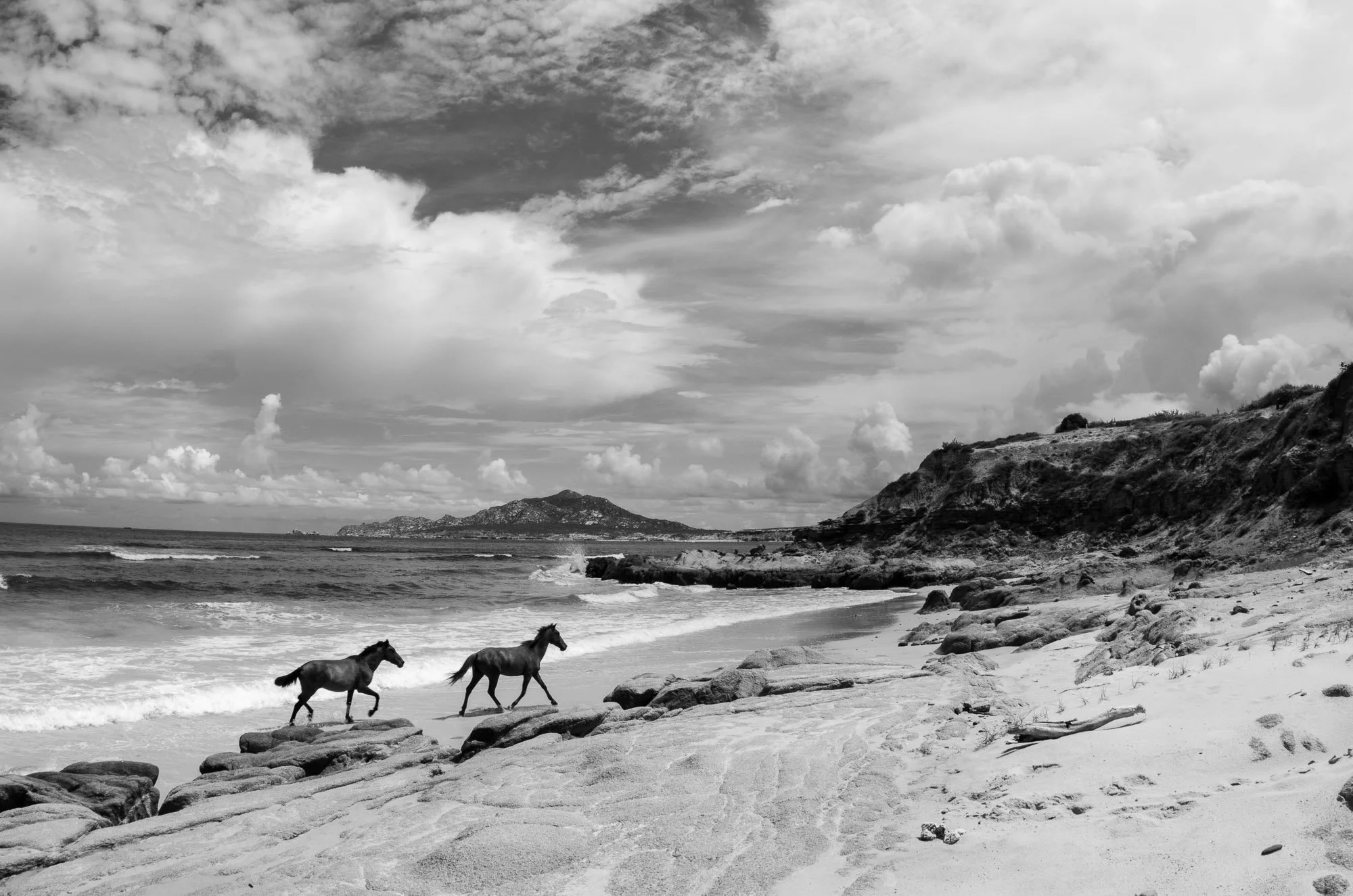
Two horses charge onto the shore of Cabo Pulmo at full gallop, kicking up sand and water in a display of raw power. Their bodies stretch to the limit with every stride, muscles defined, manes flying, imperfect yet forceful synchronization. The sea provides a clean backdrop, the horizon line stabilizes the scene while the movement shatters everything else. Each hoofbeat sends a brief explosion of texture: droplets, sand, energy suspended in the air. There’s no fine control, only momentum. This is real speed, unfiltered. The image holds in contrast: freedom against structure, nature against human rhythm. Two bodies in absolute motion, filling the space with full presence. Pure power captured in an instant.
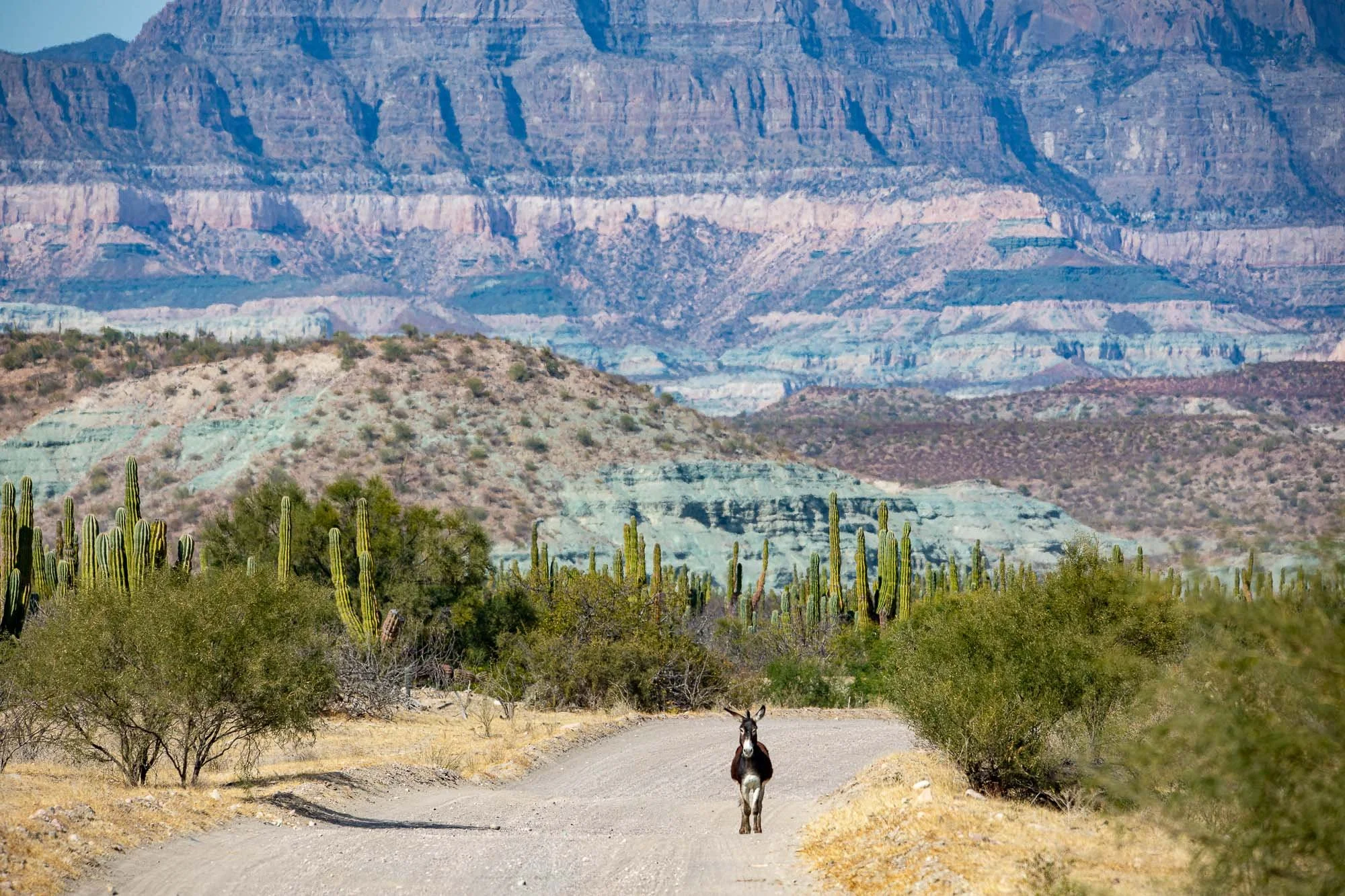
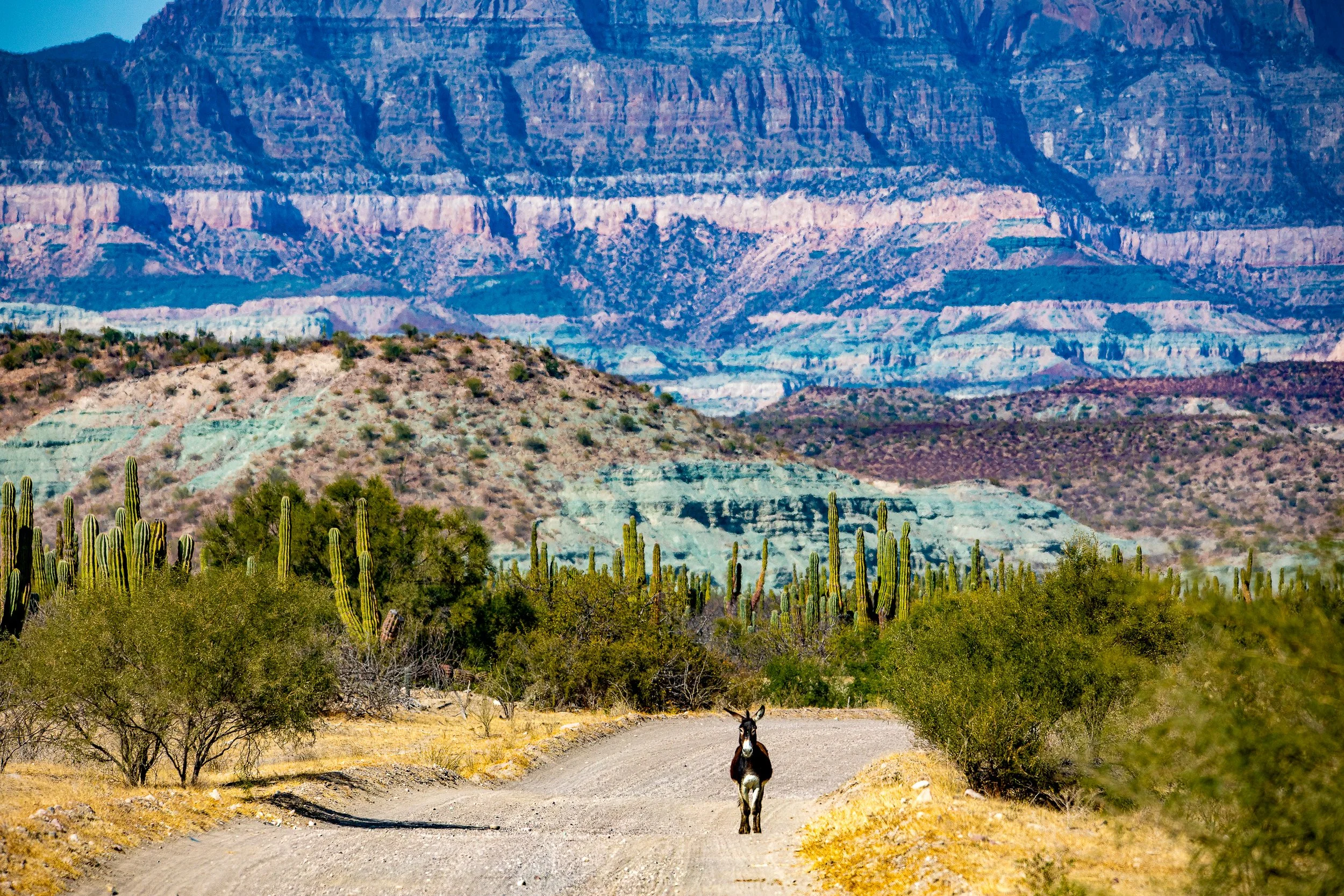
A semi-wild donkey stands alone in the middle of the road, still, watching without hurry, as if that stretch belonged to it. Behind, the Sierra de la Giganta rises with its layered formations, harsh tones, and the ancient character that defines the peninsula. The scene is simple, yet heavy. The road cuts through the frame, directing the eye straight to the animal, while the mountains hold everything with presence. No traffic, no noise, just that unexpected encounter between the human and the wild. It’s an image that captures the essence of Baja California Sur: isolation, identity, and territory. A moment where time seems paused and the landscape imposes its own rules.
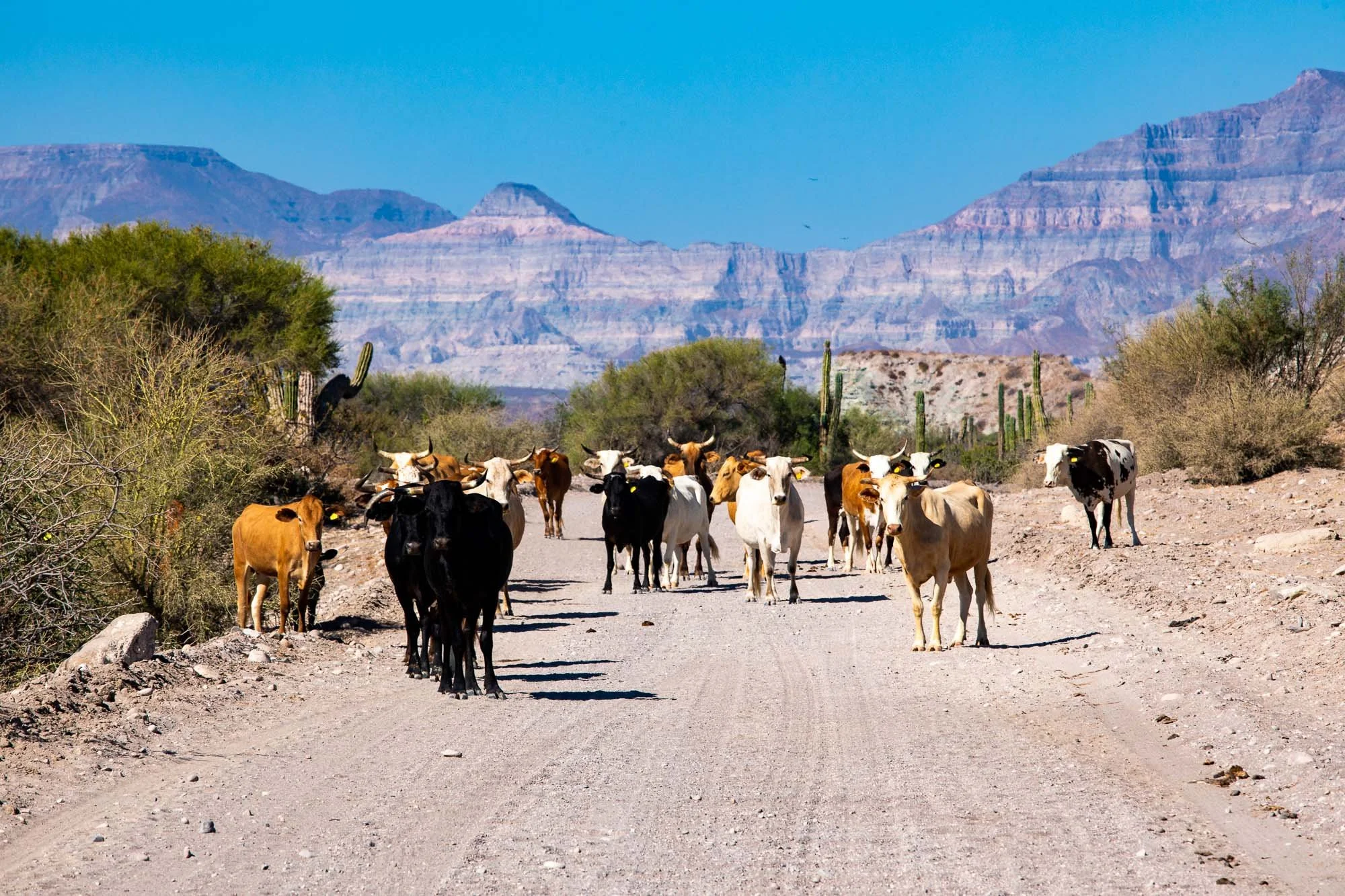
A herd of cows moves slowly along the road, taking up the entire lane as if it were a natural part of the path. They come from the coastal ranches, heading toward their watering holes, setting the pace with steady, unhurried steps. There’s no chaos; there’s routine. In the background, the Sierra de la Giganta dominates with its harsh profiles and ancient layers, holding the scene with character. The road, far from breaking the landscape, cuts through it like just another line in a system where human and rural life coexist without conflict. Dust rises lightly, and the low light sculpts simple volumes: bodies, shadows, mountains. It’s a direct, unembellished image. Tradition in motion. A clear reminder that in this part of Baja California Sur, the land still sets the rules.
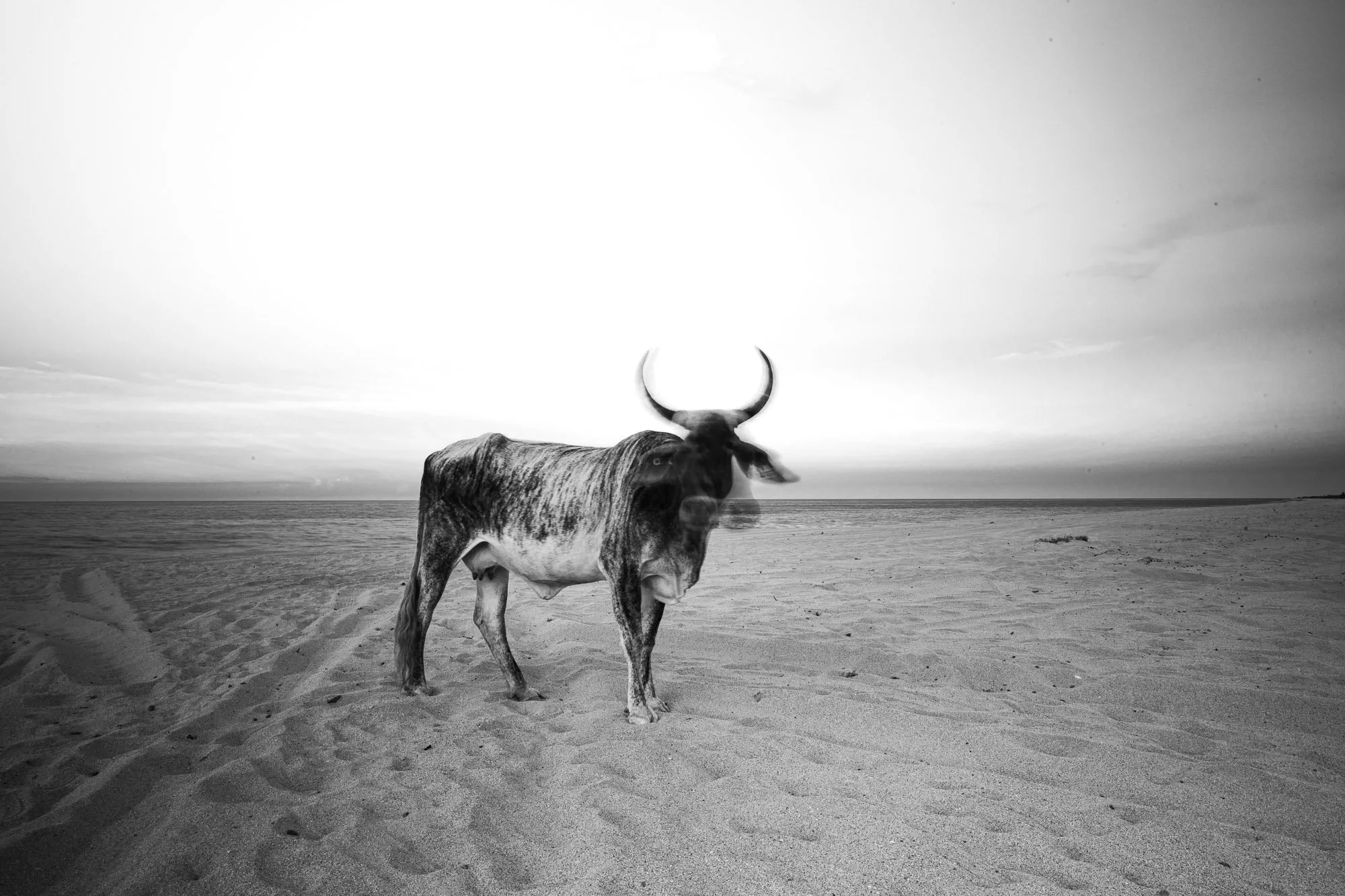
A solitary cow stands in the middle of the beach, completely out of context and yet perfectly integrated. Its silhouette cuts across the clean horizon where sea and sand meet without obstruction, creating a simple scene full of intent. There’s no rush in its stance. It’s there, still, as if time has paused around it. The contrast between domestic and wild defines the image: a ranch animal in an open space, with no fences, no visible limits. The light—low or harsh, depending on the moment—sculpts clear volumes and long shadows that reinforce the solitude. It’s a minimal, direct composition, where every element carries weight. More than a curiosity, it’s a visual statement: Baja California Sur in its purest form, where even the everyday becomes unexpected.
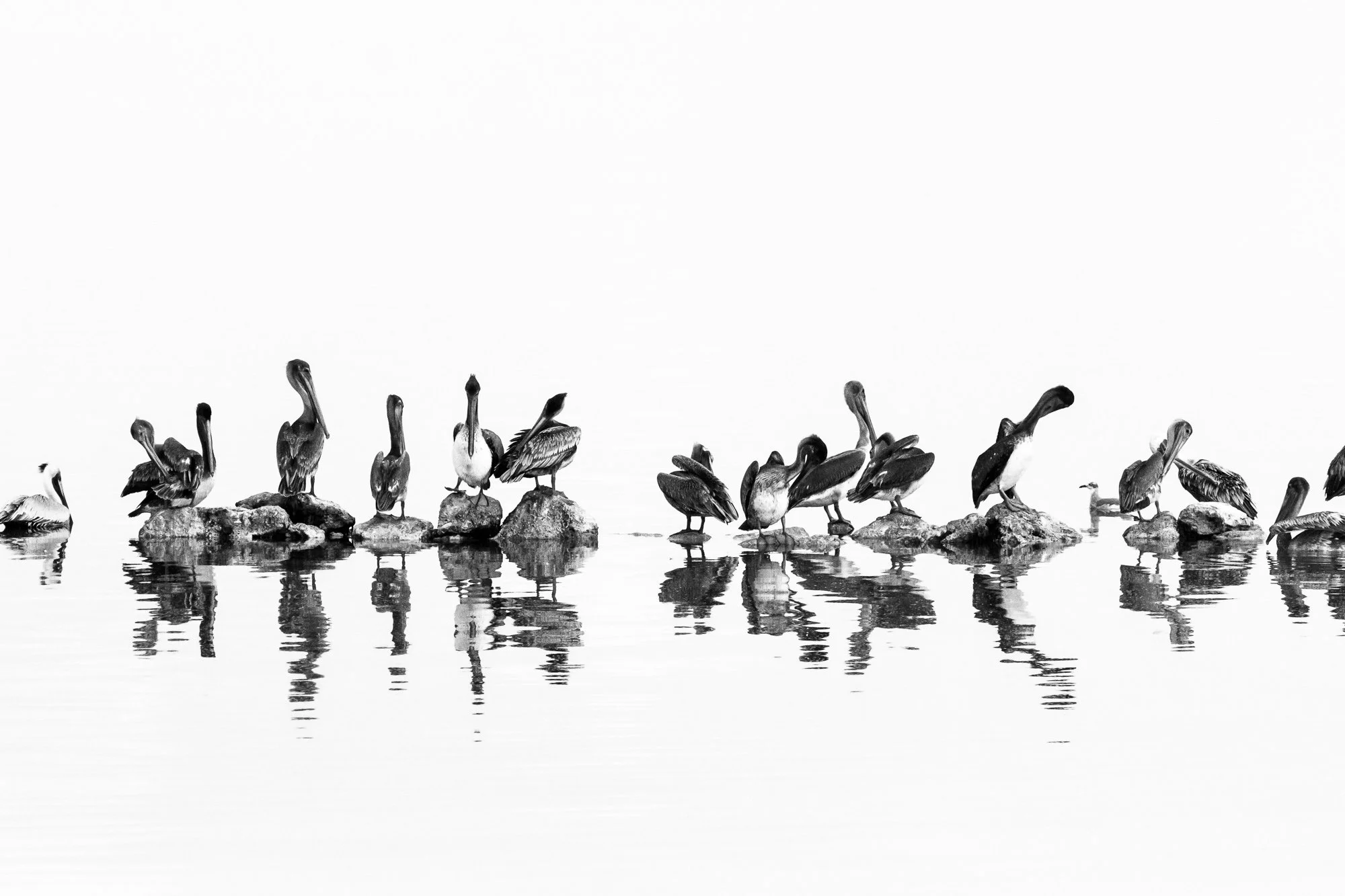
A group of pelicans is framed in high-key black and white, where almost everything is light. The background fades into soft whites, removing distractions and leaving only pure forms floating within the frame. The silhouettes are simplified: long beaks, curved necks, folded wings. Some barely appear, others overlap, creating subtle layers of depth. There’s no harsh contrast; a delicate transition between whites and grays keeps the scene light, almost ethereal. The result is minimalist and clean. More than birds, they are lines and volumes arranged with precision. An image that breathes calm and order, where the power lies in what you choose not to show.
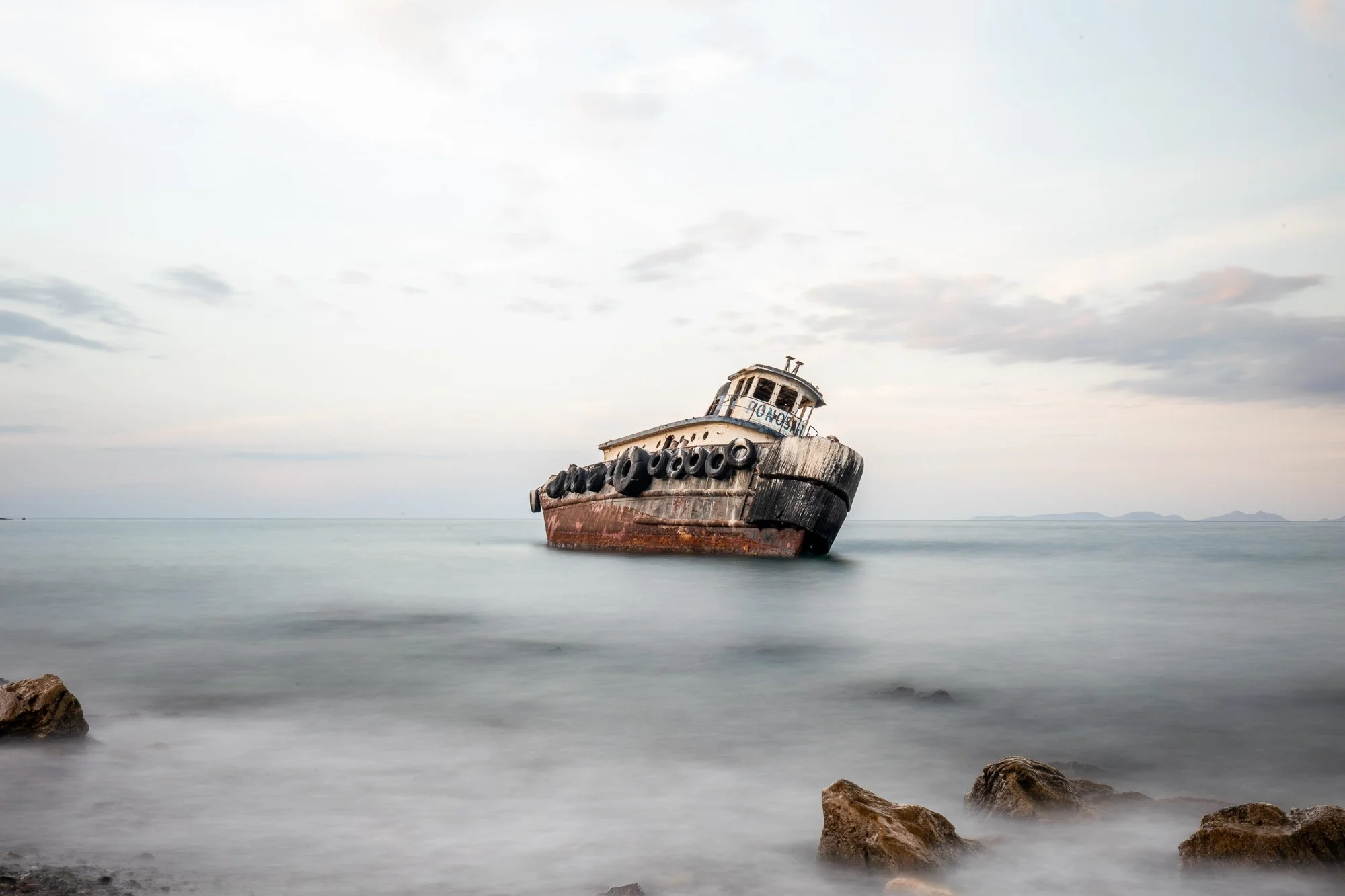
A stranded boat rests on the shore, motionless, as if the sea released it and never returned. Its structure shows the passage of time: worn wood or metal, rough textures, irregular edges that speak of decay more than history. The surroundings are open, almost empty. Sand, horizon, and silence. With no human activity, the boat ceases to be a tool and becomes an object. The composition works through contrast: what was once in motion is now permanent, fixed, out of its element. The light—harsh or low—highlights cracks, rust, and broken forms. There’s no forced drama, just real abandonment. It’s an image of ultimate pause, where time has already done all its work.
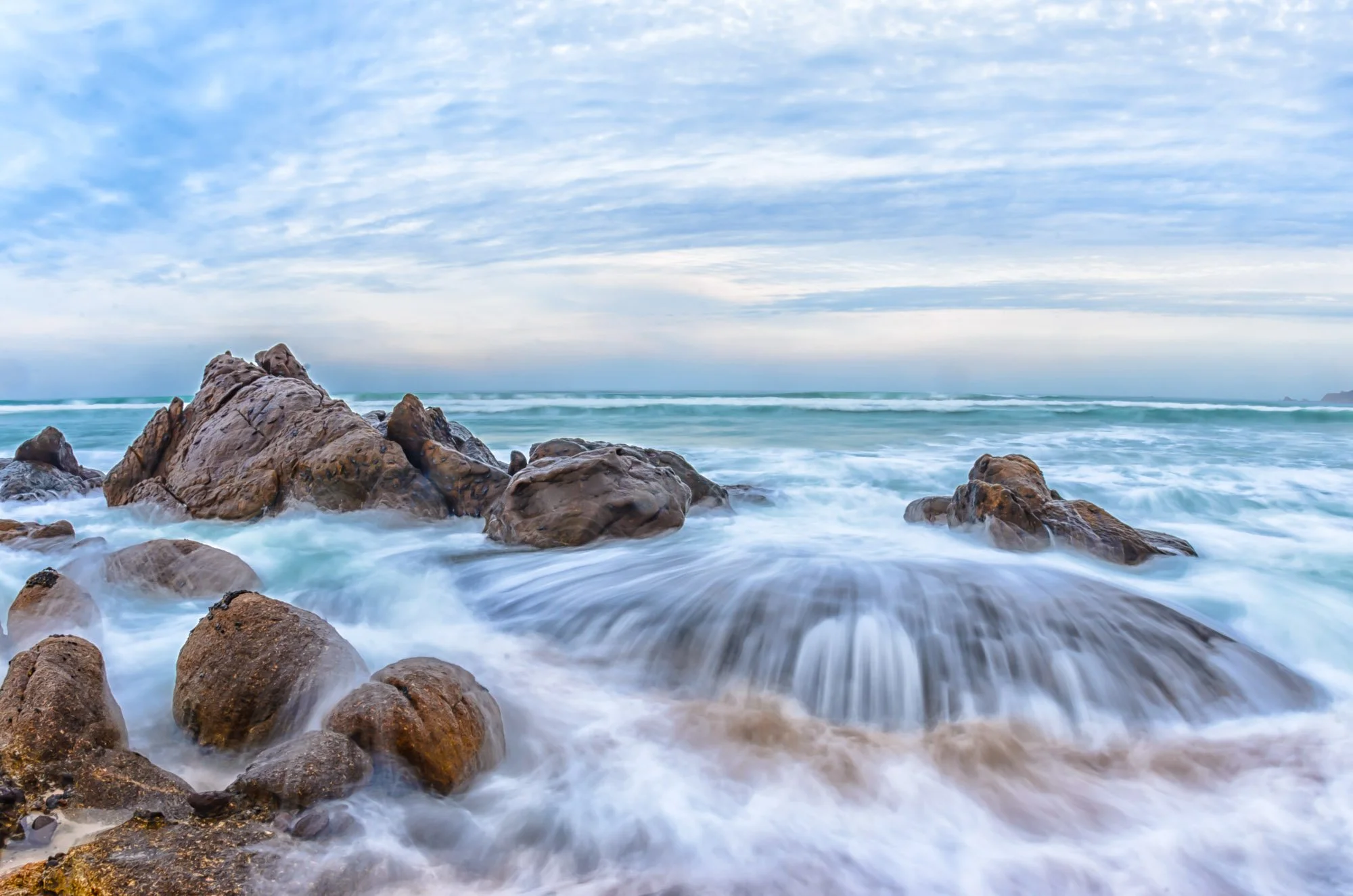
The sea crashes forcefully against a rocky shore, but in long exposure that violence transforms into something almost hypnotic. The water ceases to be chaos and becomes flow: smooth lines wrapping the rocks, foam turned into white mist sliding over the surface. The rocks, firm and immovable, act as visual anchors. Dark and solid, they contrast with the ethereal texture of the moving water. Each wave isn’t seen as a strike but as a controlled expansion that surrounds, covers, and retreats. The image plays with two times in one: the permanence of the land and the constant movement of the sea. It’s a scene of contained power, where force isn’t shouted, it’s suggested. An interpretation more than a record, where the Gulf of California becomes line and breath.
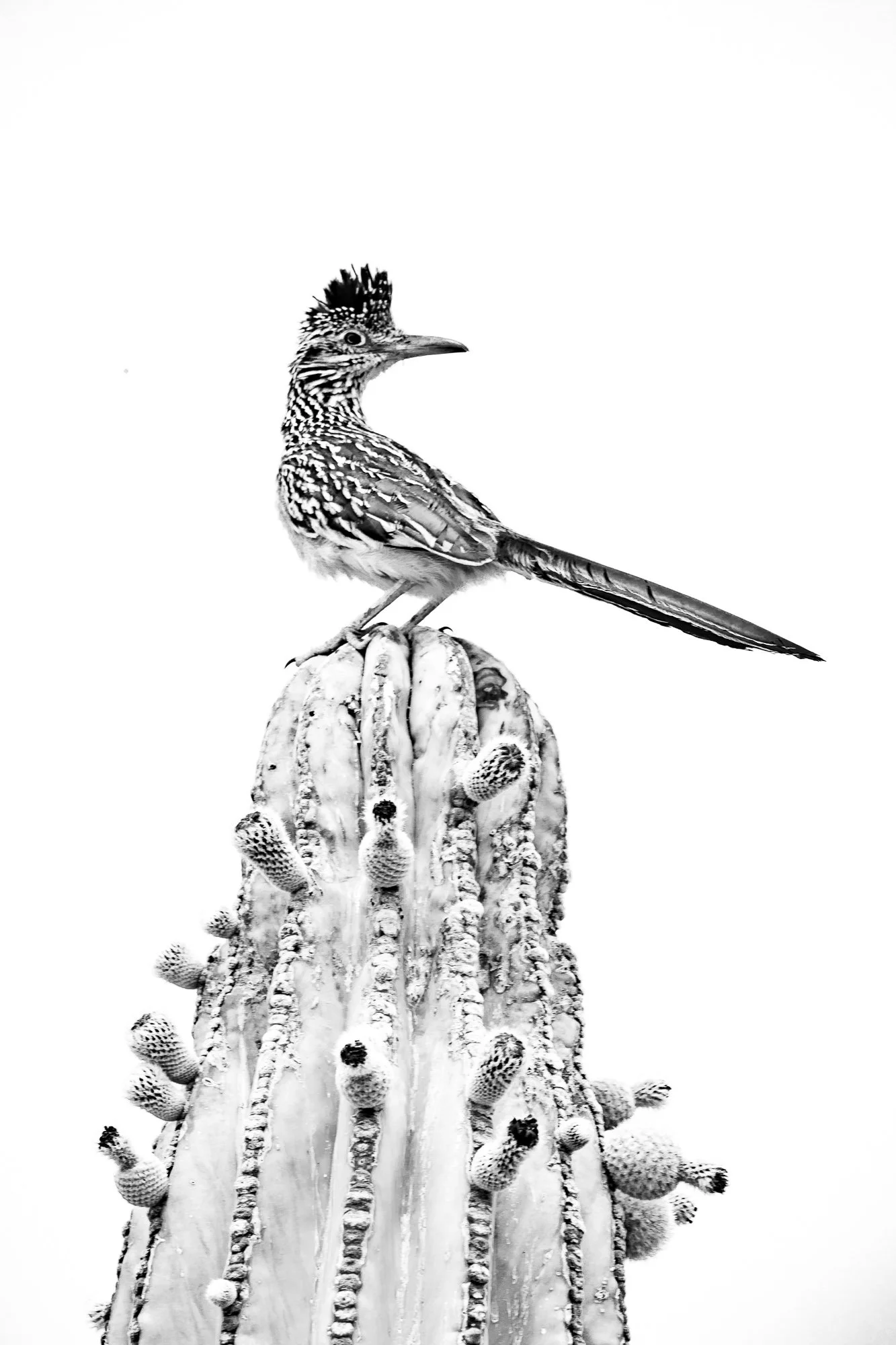
A roadrunner perches on a cactus, dominating the scene with an alert and precise posture. Its firm feet balance among the spines, while its body remains upright, ready to move in any direction. It’s not its most common spot, and that’s exactly what gives the image its strength. The cactus—likely a cardón—provides structure: vertical lines, rough texture, strong shadows. The bird breaks that rigidity with its sleek silhouette, defined crest, and gaze that always seems to be calculating. The light emphasizes the contrast between the two: the static and the agile, the defensive and the opportunistic. It’s a simple scene, yet full of intent. Territory, adaptation, and character captured in a single frame.
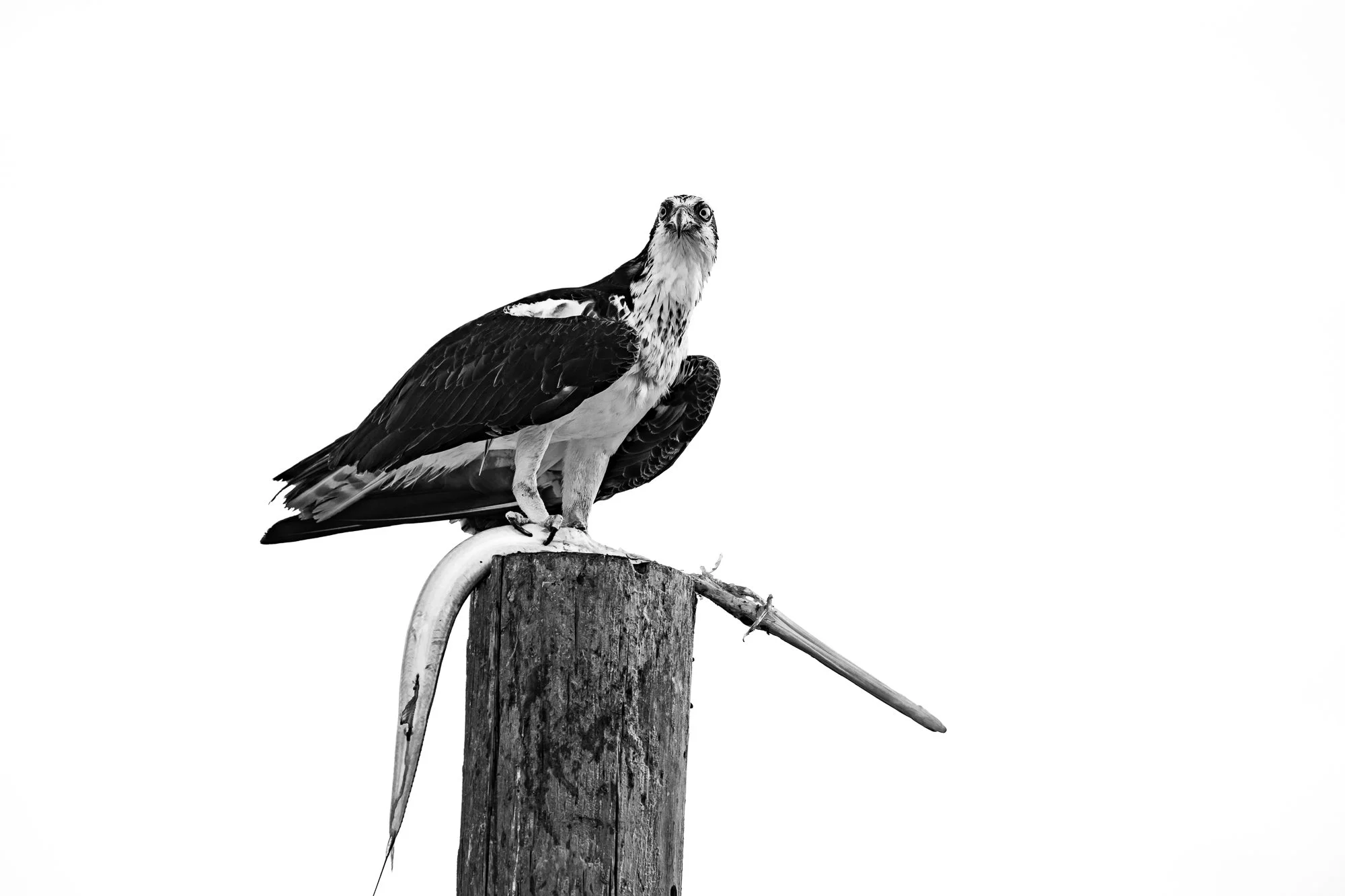
An osprey perches on a post, firm and dominant, holding a massive trumpetfish in its talons. The scene is still, yet charged with tension: the bird no longer struggles with the water—it now controls the situation from above. The post creates a clean vertical line that organizes the composition, while the background—likely open sky or sea—remains simple so as not to compete. The contrast of shapes is the main strength: the bird’s robustness against the absurd length of the fish, hanging and emphasizing its size. The light defines key textures: well-marked feathers, scales subtly shining, enough detail to reinforce the reality of the catch. It’s an image of dominance and outcome. The hunt is over; this is the trophy, displayed with complete clarity.
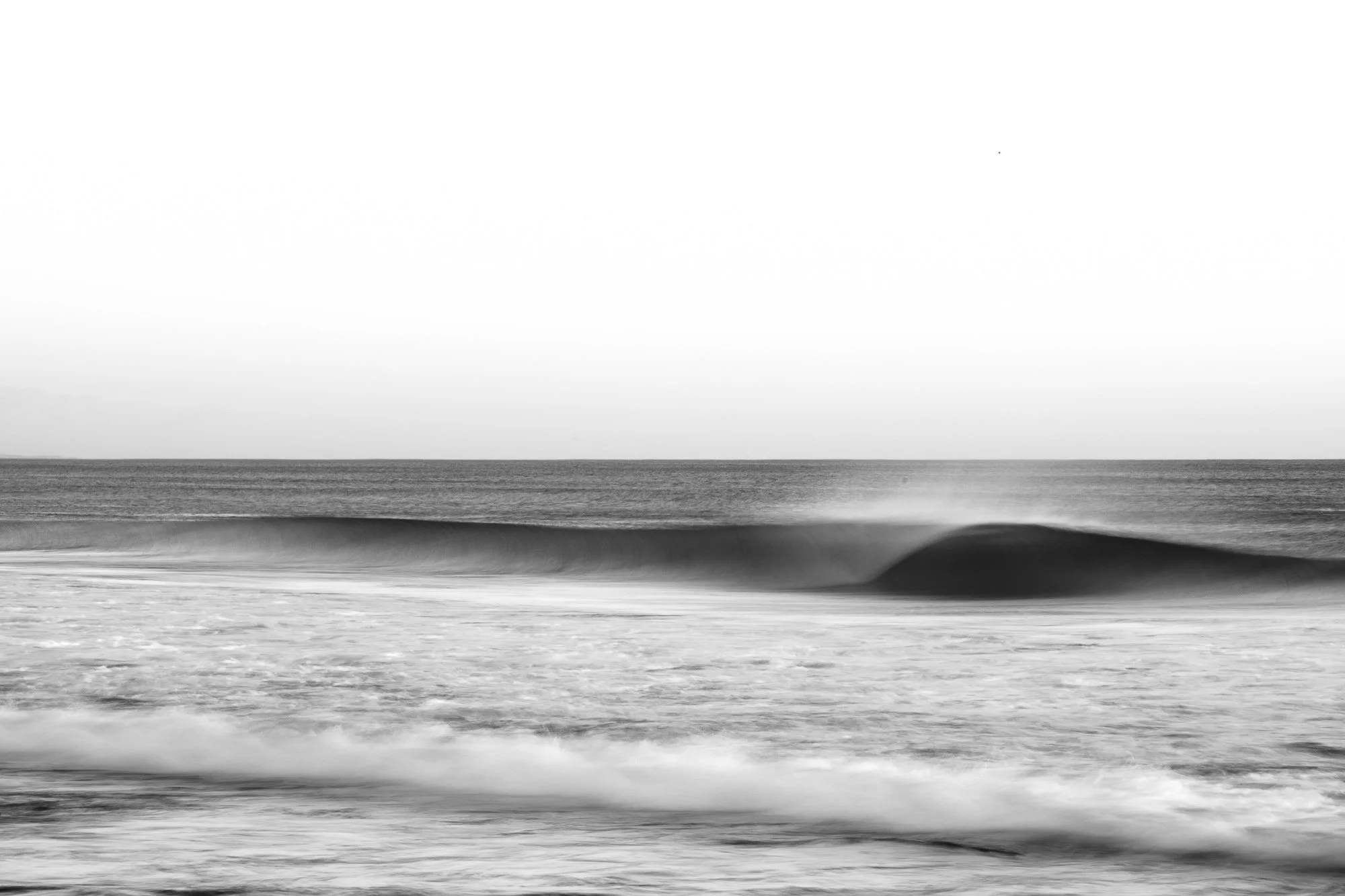
A solitary wave glides in motion blur, transformed into an abstract shape where movement is everything. It is no longer perceived as defined water, but as a fluid mass stretching and dissolving within the frame, creating smooth lines and continuous transitions. The crest is barely distinguishable, reduced to a diffuse streak that suggests direction rather than detail. There’s no frozen foam or visible droplets; everything is drag, a trace of energy leaving its mark on the image. The background fades or merges, reinforcing the sense of isolation. It’s a photograph of interpretation. Minimalist, clean, focused on rhythm and flow. The wave stops being a moment and becomes a continuous, almost painterly gesture.
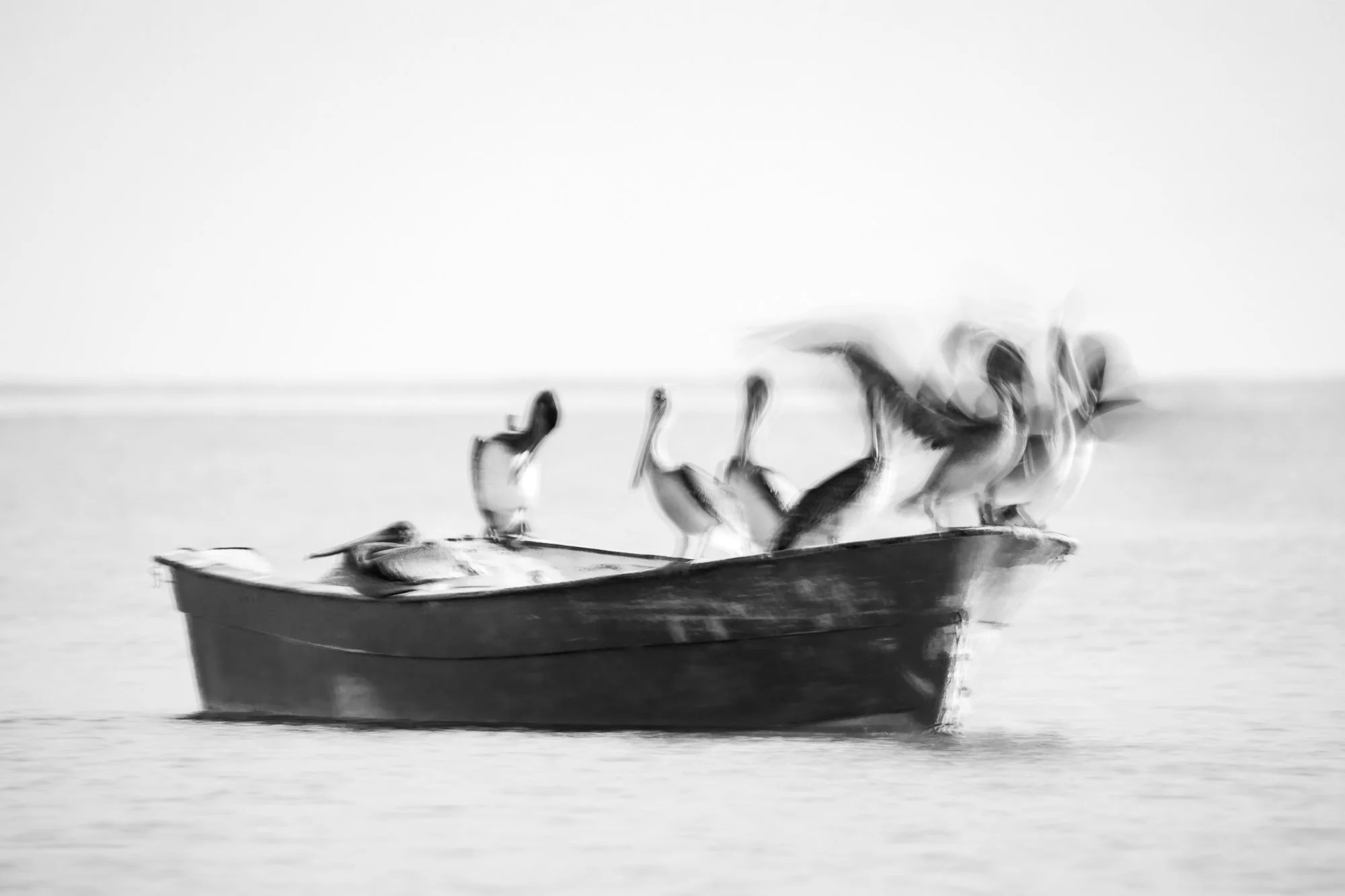
A anchored panga rests on calm water, transformed into an improvised refuge for a group of pelicans that occupy it completely. They line the edges, packed together—some upright, others at rest—creating a natural composition of repeated forms over the simple structure of the boat. The scene is balanced: the horizontal line of the panga, the gentle verticality of the bodies, and a clean background that doesn’t compete. The water reflects lightly, adding texture without distraction. There’s no action, only pause. A moment where the human presence fades and wildlife takes control. It’s an image of quiet appropriation. Coastal routine transformed into something visually precise. Simple, direct, and full of character.